
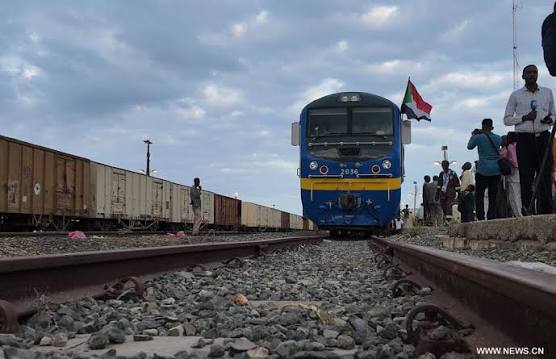
KHARTOUM – Sudan Railways Corporation is planning cross-border rail links with Egypt, Chad and South Sudan while working to restore three passenger trainsets and rehabilitate domestic routes damaged or shut down during the war.
Director General Musa Al-Qoum Al-Jahdi said the state railway operator was seeking to rebuild its operating capacity, repair damaged infrastructure and expand the national network as Sudan prepares for reconstruction.
He said the corporation owns four passenger trainsets, but only one is currently operational.
The plan is to return the remaining three to service after maintenance and spare parts are secured, allowing more passenger services, particularly along the Port Sudan-Wad Madani corridor.
No timetable was announced for bringing the three trainsets back into operation.
Regional Rail Links
Al-Jahdi said a joint Sudanese-Egyptian committee was studying a proposed rail connection between the two countries, including construction costs and possible financing arrangements.
The project is intended to increase passenger and freight movement between Sudan and Egypt, although no implementation date or financing package has been announced.
Sudan Railways has also completed studies for a proposed transcontinental route linking Port Sudan on the Red Sea with Adré on the Chadian border.
The planned line would pass through Gezira, Sennar, White Nile, Kordofan and Darfur, connecting agricultural and production areas with Port Sudan and regional markets.
Another proposed project would restore the Babanusa-Wau railway connection with South Sudan.
The route historically linked western Sudan with what is now South Sudan but has been disrupted by decades of conflict and deteriorating infrastructure.
Al-Jahdi also cited plans for the Sennar-Damazin line, which would serve agricultural and mineral-producing areas in Blue Nile.
Rebuilding Domestic Routes
The corporation is also preparing to restore the Abu Hamad-Wadi Halfa line and expand private sidings serving industrial and agricultural projects.
One planned connection would serve DAL Food Industries operations in Abu Hamad, with the aim of reducing freight costs and improving links between production areas and markets.
Sudan once operated one of Africa’s largest railway networks, linking Port Sudan with Khartoum, northern Sudan, Darfur and the country’s southern and agricultural regions.
But decades of underinvestment, ageing locomotives and rolling stock, inadequate maintenance and growing reliance on road transport steadily reduced the railway’s share of passenger and freight traffic.
The war that began in April 2023 caused further damage.
Large sections of the network across central, western and southern Sudan stopped operating, while stations, workshops, bridges, locomotives and track infrastructure were damaged or became inaccessible.
Al-Jahdi said in an earlier interview that when he took over the railway authority, regular operations had effectively been reduced to the Atbara-Port Sudan corridor.
Flooding in 2024 further disrupted sections of the network.
The corporation has since worked to reopen the northern route from Atbara through Shendi toward Khartoum Bahri following inspections, security assessments and repairs.
Locomotives and Stations Damaged
The war also affected railway equipment concentrated in Khartoum.
Al-Jahdi previously said seven large locomotives and three shunting locomotives associated with the Khartoum workshops had been moved to Atbara and were out of service.
Railway bridges, tracks and buildings were also damaged, including the old Khartoum railway station and the newer passenger terminal.
Restoring those assets will require significant investment at a time when the corporation continues to face financial constraints.
Al-Jahdi has acknowledged that railway revenues have not been sufficient to cover operating costs and salaries, requiring support from the Finance Ministry.
The authority also depends on imported components for some rehabilitation work, including steel sleepers and reinforcing steel used in producing concrete sleepers, making the pace of reconstruction dependent on financing and supply availability.
Railways Seen as Reconstruction Tool
Al-Jahdi said rebuilding Sudan’s railway system could play a strategic role in post-war economic recovery.
Rail transport can move large volumes of goods over long distances at lower costs than road haulage, potentially improving connections between agricultural and mining regions, ports and domestic markets.
Restored regional routes could also expand Sudan’s trade links with neighbouring countries and provide inland states with greater access to Port Sudan.
The railway authority is particularly focused on freight because reduced transport costs could support agriculture, industry and exports during reconstruction.
Al-Jahdi also condemned damage to railway facilities during the conflict and blamed the Rapid Support Forces for destruction affecting the sector.
The corporation has not disclosed the total cost of rehabilitating the national network or financing requirements for the proposed international connections.
It also has not announced firm construction schedules for the links with Egypt, Chad or South Sudan.