

EL OBEID – Sudan’s army and allied forces reported new advances across North and West Kordofan on Tuesday, while the Rapid Support Forces said it had captured the strategic town of Sali in Blue Nile, highlighting simultaneous fighting across two increasingly active fronts.
In West Kordofan, the army’s Special Operations Forces said they carried out an operation around Kharq Al-Dud, north of Ayal Bakhit in Al-Khuwei locality, extending toward the Ayal Bakhit area.
Spokesperson Mohammed Didan said the operation, conducted alongside the Joint Force and other allied formations, killed dozens of RSF fighters, including two officers identified as Brigadier General Ahmed Al-Dodo and Colonel Ahmed Kabir.
He said the forces captured seven combat vehicles and two rocket launchers and destroyed six other vehicles.
The claims and casualty figures could not be independently verified.
Military sources also said the army and allied forces had taken control of Umm Marahik, an area administratively linked to Al-Nahud locality in West Kordofan and close to Fouga.
The forces reportedly advanced from the North Kordofan axis.
Videos released by the Joint Force over the past two days showed what the group said were captured and destroyed RSF vehicles and detained fighters, although the location and timing of the footage could not be independently verified.
The reported advance toward Umm Marahik follows a series of army gains across North Kordofan.
The military has previously announced control of Bara, Jabra Al-Sheikh, Umm Sayala and several surrounding areas, followed by Al-Mazroub in October, gradually extending its operations westward toward the approaches to Al-Nahud.
The latest developments suggest the army is attempting to widen the corridor between North and West Kordofan as fighting shifts toward areas that connect major supply routes across the region.
RSF Says It Captured Sali in Blue Nile
Farther east, the RSF said on Tuesday it had seized Sali in Sudan’s Blue Nile region following fighting with the army.
Sali lies about 35 kilometres north of Al-Kurmuk, near the Ethiopian border, and sits along a route connecting the regional capital Ed Damazin with areas closer to the frontier.
Local sources said RSF forces attacked from positions linked to the Ethiopian border area and that army units subsequently withdrew from Sali.
The sources also accused Ethiopia of facilitating the operation.
Those claims could not be independently verified, and Ethiopia has previously denied Sudanese accusations that its territory is being used to support RSF military operations.
The Sudanese army had not issued an immediate response to the RSF claim of control over Sali.
The announcement came one day after the army’s 4th Infantry Division said it had repelled coordinated attacks by the RSF and forces allied with the Sudan People’s Liberation Movement-North faction led by Joseph Tuka against Sali on the Al-Kurmuk axis and Bakori on the Geisan axis.
The division said its forces and allied units prevented the attackers from breaking through their positions and inflicted casualties and equipment losses.
It did not provide independently verifiable casualty figures.
The competing claims underscore the fluid situation in Blue Nile, where control of frontline towns and roads has shifted repeatedly as fighting intensifies near the Ethiopian border.
Army Says It Downed Strategic Drone
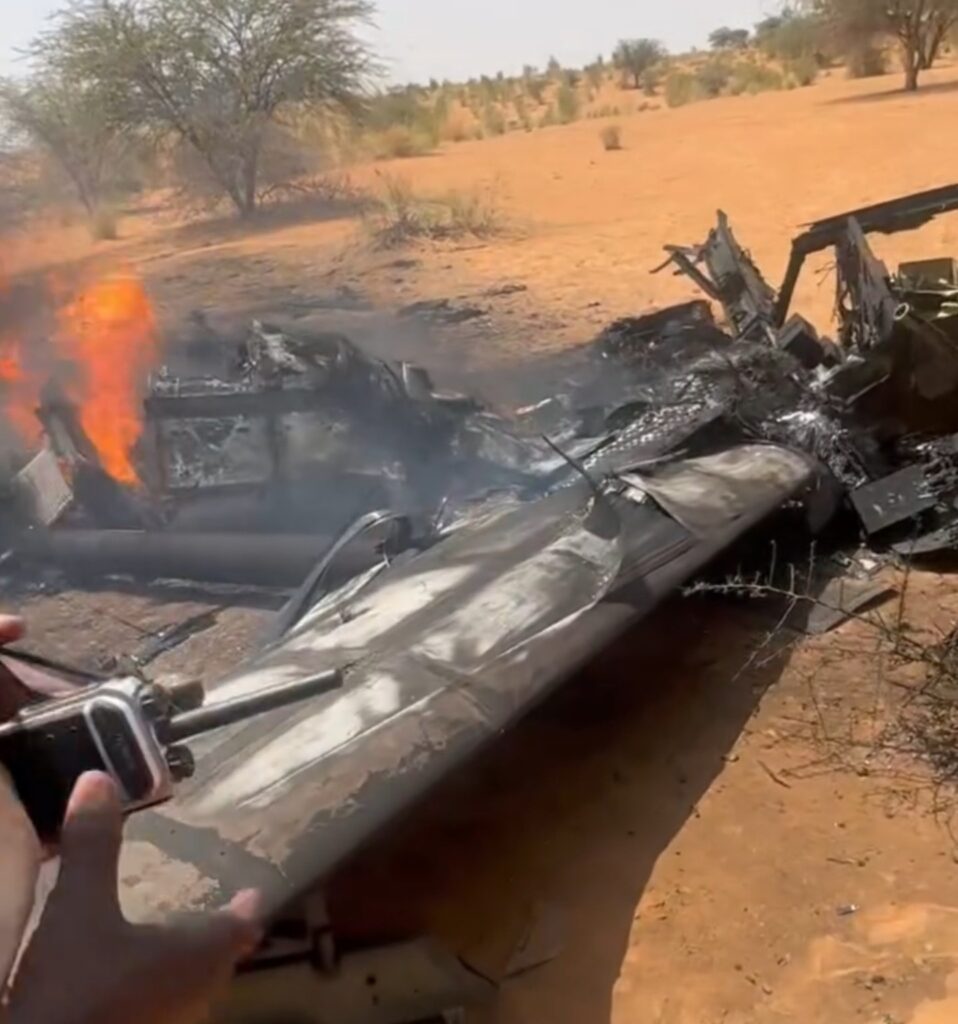
The Sudanese Armed Forces also said Tuesday that air defences in Blue Nile shot down what they described as a strategic drone that had crossed the border from Ethiopia.
The army did not identify who operated the aircraft, where it was brought down or what mission it was carrying out.
It also did not establish whether the drone was directly connected to the ground fighting around Sali and Bakori.
The announcement comes amid growing Sudanese accusations that drones and other military support for the RSF are entering the country from Ethiopia.
Khartoum has filed complaints with the U.N. Security Council and African Union Peace and Security Council and released a government report alleging that dozens of drone operations were launched from Ethiopian territory during 2026.
Those allegations remain disputed and have not been independently verified.
Two Fronts Intensify
The developments in Kordofan and Blue Nile point to an expansion of major ground operations across separate parts of Sudan.
In Kordofan, the army and allied groups are pushing west from positions around El Obeid and areas retaken in recent months, while the RSF maintains significant positions farther west.
In Blue Nile, fighting is concentrated around strategically important border corridors linking Ed Damazin, Geisan and Al-Kurmuk with areas close to Ethiopia.
Control of roads and towns in both regions carries military importance because they serve as routes for reinforcements, supplies and movement between front lines.
The fighting also poses growing risks to civilians in areas already affected by displacement and shortages of basic services.
Independent access to several of the contested areas remains limited, making battlefield claims from both sides difficult to verify.


