

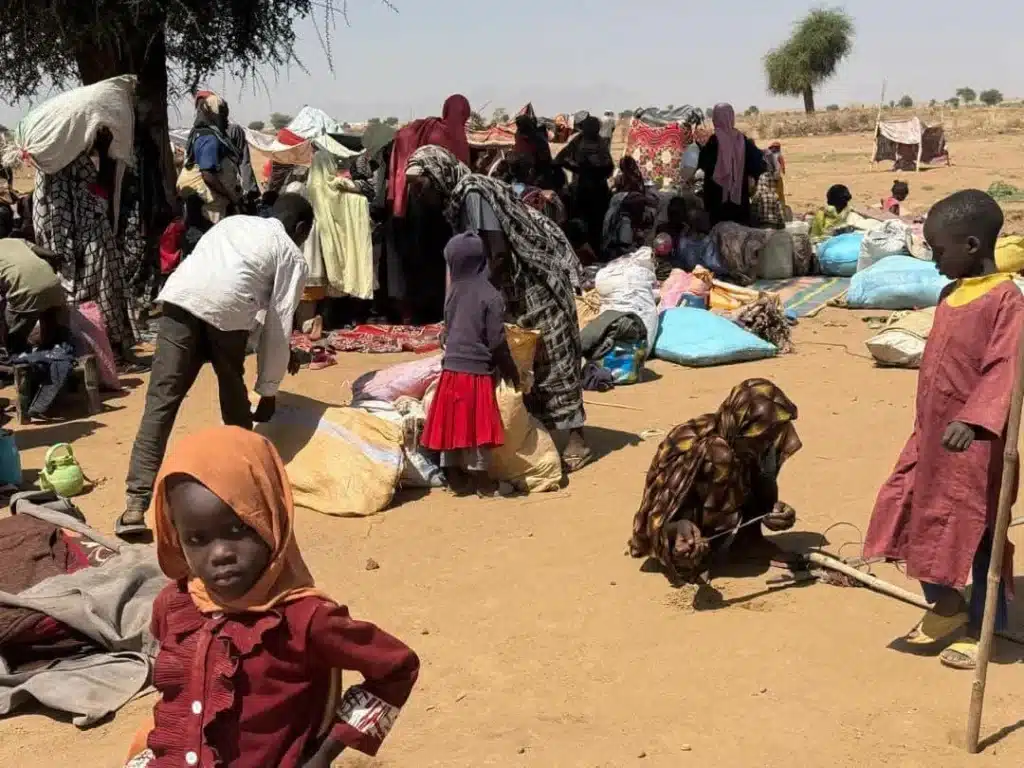
TAWILA – More than 1,100 people arrived in Tawila, North Darfur, over six days after fleeing worsening hunger, high food prices and poor agricultural conditions in parts of North and South Darfur, a displacement group said.
Adam Rijal, spokesperson for the General Coordination for Displaced Persons and Refugees, said 1,117 people from 223 families reached Tawila between Nov. 6 and 11.
The families were temporarily accommodated at Tawila Al-Omda camp pending their transfer to New Tina camp, one of several recently established displacement sites in the area.
The new arrivals came from areas northeast of Mellit and Tarbaw in North Darfur and from East Marshang and surrounding areas in South Darfur, according to the group.
Rijal said hunger, rising prices, poor rainfall and a weak agricultural season had reduced food supplies and household incomes, pushing families to leave their communities in search of food and other basic necessities.
Women, children, older people and other vulnerable groups make up a significant proportion of the arrivals, increasing pressure on already limited supplies of food, safe water, shelter, healthcare and sanitation in Tawila.
Sudan’s 2026 agricultural season has been affected by below-average rainfall in many farming areas, alongside conflict, shortages of agricultural inputs and restricted access to farmland.
The Food and Agriculture Organization has warned that poor rainfall during the June-to-September growing season could reduce cereal production, adding further pressure to food availability and prices.
Darfur has already seen repeated displacement linked to fighting and food shortages, with Tawila becoming a major destination for civilians fleeing insecurity and deteriorating living conditions elsewhere in the region.
The General Coordination called on U.N. agencies, humanitarian organizations and authorities to urgently expand assistance for the latest arrivals.
The group said the displacement reflected the combined impact of conflict, hunger and deteriorating environmental and economic conditions across Darfur.


