
Khartoum – Damaged telecommunications networks, funding shortages and operational restrictions are disrupting humanitarian coordination across Sudan, leaving parts of Darfur and Kordofan poorly connected and limiting aid agencies’ ability to assess needs and reach affected communities, according to a September humanitarian communications report.
The WFP-led logistics and telecommunications group said Sudan’s three mobile operators — MTN, Zain and Sudani — continued to operate at reduced capacity, while available services remained expensive, congested and unreliable.
The report said partial connectivity had been restored in several areas, particularly Port Sudan, Kassala, Khartoum and Atbara, but unstable electricity supplies and dependence on backup power continued to affect network reliability.
Darfur and Kordofan Remain Heavily Disconnected
In Darfur, Kordofan and other parts of western Sudan, damaged fibre-optic networks, destroyed or vandalized telecommunications towers and insecurity continue to isolate communities.
Security conditions are also preventing technicians from reaching some damaged infrastructure, delaying repairs and prolonging outages.
The report warned that communications disruptions affect more than routine connectivity. They reduce humanitarian organizations’ ability to coordinate movements, conduct needs assessments, communicate with affected communities and manage operations in hard-to-reach areas.
The pressure is growing as people return to parts of Khartoum and Al Jazirah, where reduced fighting has encouraged movement back to areas with heavily damaged infrastructure and limited public services.
Internet Maintained for 1,700 Humanitarian Users
Despite the challenges, the group maintained internet services for about 1,700 users at 70 humanitarian locations.
Those included 44 sites in Port Sudan and 21 in Kassala, alongside operations in Kosti, Damazin, Gedaref, Dongola and Atbara.
In Khartoum, shared internet services continued from an International Organization for Migration facility, while preparations were underway to establish a second connectivity hub at a World Food Programme office to serve nearby offices and guesthouses.
Humanitarian agencies are gradually expanding their presence in Khartoum while maintaining major operations in Port Sudan.
The report said shortages of suitable offices, accommodation and essential services, along with repairs to damaged buildings, were slowing the transition.
A separate proposal to expand the U.N. presence in Khartoum remained pending, with no change to the existing staffing ceiling and no confirmed timetable for additional relocations.
Satellite Alternatives Restricted
Satellite communications provide an alternative where terrestrial networks are unavailable, but their high cost and uneven availability limit their use.
The report said restrictions on satellite services, including a nationwide ban on Thuraya, further reduced communications options in priority humanitarian areas.
In Darfur, shared connectivity remained available in El Geneina, with preparations underway to extend services to additional humanitarian locations in El Geneina and Tawila.
Similar services were also being prepared in Wad Madani to support the planned expansion of humanitarian operations.
Licensing Delays Affect Khartoum and Omdurman
Administrative barriers are also delaying communications services.
The report said delays in renewing radio equipment licences and assigning frequencies had prevented the rollout of planned services in Khartoum and Omdurman, despite most equipment and technical preparations being completed.
The licensing process had also slowed as the telecommunications regulator relocated to Khartoum and increasingly required applications to be handled in person.
Five security operations centres in Port Sudan, Kassala, Gedaref, Kosti and Damazin continued to provide incident monitoring and emergency communications for humanitarian personnel.
Community Connectivity Reaches 3,000 People
Humanitarian telecommunications support is also being extended directly to communities.
About 3,000 people used internet access, solar power and device-charging services at a community centre in Khartoum during September.
The group said it was also exploring partnerships to rehabilitate computer laboratories at the University of Khartoum and working with health authorities on possible connectivity support for government health facilities in Darfur and Kordofan.
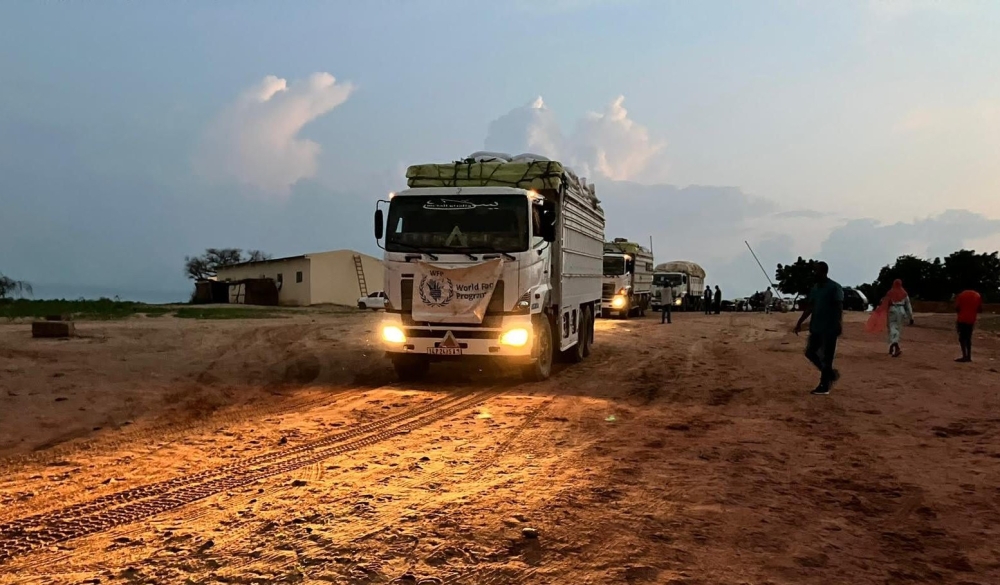
Reliable communications remain particularly important because WFP is reaching between four million and five million people each month with food, nutrition and cash assistance.
Aid operations continue amid fighting, damaged roads, flooding, administrative restrictions and other access constraints.
Funding Shortfall Limits Expansion
The telecommunications component of the 2026 humanitarian response requires about $5.5 million, according to the report.
The group received $500,000 in August through WFP’s flexible financing mechanism.
It also submitted a joint proposal to the Sudan Humanitarian Fund that includes about $900,000 for telecommunications, which would help maintain existing services and address priority gaps if approved.
The report warned that insufficient funding means most resources are being used simply to maintain current services rather than expand coverage.
Equipment shortages, import restrictions, customs delays and access constraints are further slowing the installation and maintenance of communications systems, particularly in Darfur and Kordofan.