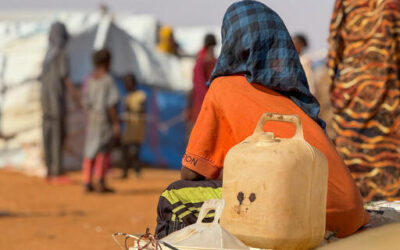
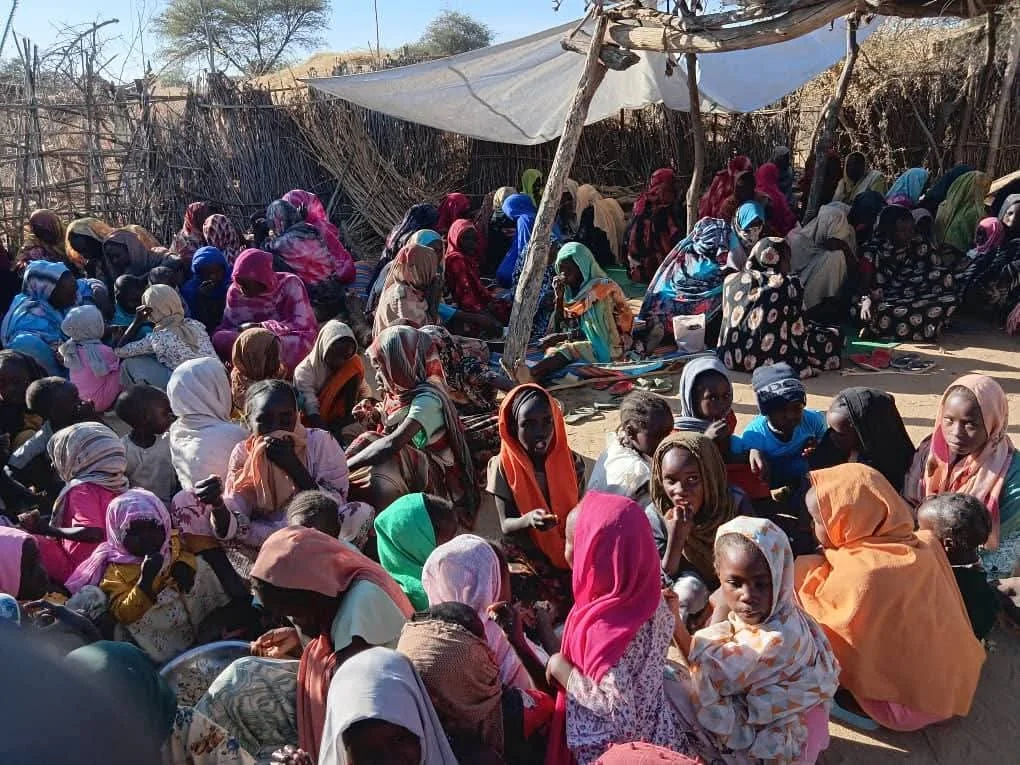
KUTUM – More than 51,500 displaced people at Fata Borno camp in North Darfur are facing severe shortages of food, drinking water and health services, local emergency groups warned, calling for urgent humanitarian intervention.
The Fata Borno Emergency Room and the camp’s Women’s Emergency Room said in an appeal dated Oct. 1 that the camp hosts about 44,000 long-term displaced people and 7,500 recent arrivals.
The groups said growing needs and limited humanitarian resources were putting thousands of families at risk, with shortages also affecting shelter, education and protection services.
Thousands of Families Face Growing Food Shortages
The emergency groups said irregular humanitarian assistance had created a widening food gap for thousands of families.
They called for regular food distributions, with priority given to the most vulnerable households, including families headed by women, older people and children.
Sudan is already facing a severe food security crisis. U.N. agencies warned earlier this year that about 19.5 million people were experiencing crisis levels of food insecurity or worse, while 14 areas in Darfur and Kordofan could face a risk of famine under worst-case scenarios.
Half of Water Pumps Out of Service
Water shortages are another major concern at Fata Borno.
The emergency rooms said six of the camp’s 12 water pumps are not functioning, while only one of two water tanks remains operational.
They called for the damaged water infrastructure to be repaired and for sufficient quantities of safe drinking water to be provided.
Disruptions to water services increase health risks in crowded displacement settings, particularly for children and other vulnerable residents.
One Main Health Centre Serving the Camp
Health services are also under severe pressure.
According to the appeal, the camp relies on one main health centre, which is struggling with shortages of medicines, medical supplies, equipment and referral and emergency services.
The groups called for additional medical personnel, medicines and equipment, as well as stronger nutrition and reproductive health services.
They also requested expanded psychosocial support for people affected by displacement and prolonged conflict.
Children Struggle to Continue Education
The emergency groups said displaced children were facing difficulties continuing their education because of shortages of textbooks, desks, classrooms, teaching materials and staff.
They called for support for schools, kindergartens and traditional Quranic schools, as well as improvements to the wider learning environment.
Protection services are also needed for women, girls, children and other vulnerable groups, the statement said.
Climate Pressures Add to Humanitarian Needs
The crisis comes as conflict, displacement and climate pressures continue to undermine livelihoods across Sudan.
Recent agricultural assessments have raised concerns over below-average rainfall in major farming areas during the 2026 rainy season, potentially affecting crop production and food availability.
Other parts of Darfur have simultaneously experienced heavy rains and flooding that damaged homes, schools and water facilities, highlighting the varying climate pressures facing displaced communities.
Emergency Groups Appeal for Immediate Support
The Fata Borno emergency groups appealed to U.N. agencies, humanitarian organizations, donors and other partners to provide regular food assistance, restore water systems, strengthen health care and nutrition programmes and supply educational, shelter and protection materials.
They warned that rising displacement combined with limited resources required an urgent and coordinated response.
Further delays, they said, risk increasing the vulnerability of displaced families and deepening an already severe humanitarian crisis.