

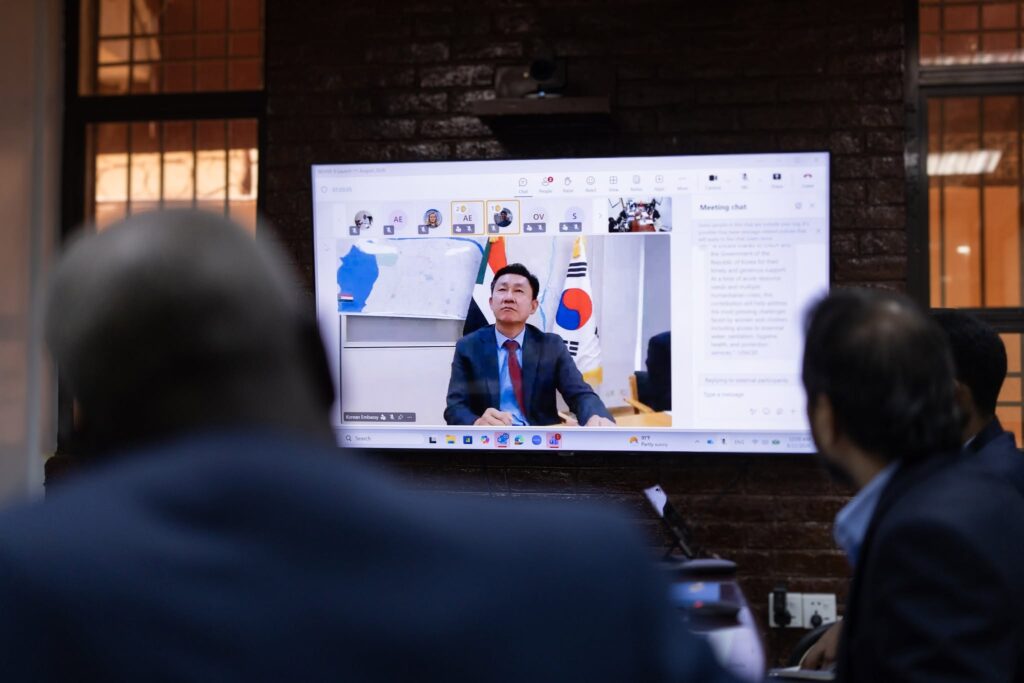
KHARTOUM – The United Nations Development Programme (UNDP) and South Korea have launched the second phase of the REVIVE initiative in Sudan, a 12-month programme aimed at restoring water services, supporting livelihoods and helping war-affected communities recover from the impact of the conflict.
The programme, launched in Khartoum, is designed to move beyond emergency relief by helping communities rebuild basic services and strengthen local capacity for early recovery after more than three years of war.
According to UNDP, the initiative will improve safe access to water for about 500,000 people by using solar power to operate 20 irrigation water sources. It will also support rubble clearance and the removal of explosive ordnance and other hazards from 20 sites.
The programme will include cash-for-work activities to rehabilitate water facilities and provide 10 agro-processing units to support value chains for smallholder farmers.
Around 9,000 people are expected to participate in community-led early recovery planning, while 90 local officials and community leaders will receive training to strengthen their ability to respond to humanitarian needs and support recovery efforts.
South Korea’s ambassador to Sudan, Park Sang-tae, said his country understands what it means to rebuild after crisis, adding that Seoul’s support is intended to complement humanitarian assistance with investments that help communities restore livelihoods and essential services.
UNDP Resident Representative in Sudan Luca Renda said Sudanese communities need more than emergency aid after years of war, stressing that the partnership with South Korea would help restore water services, revive incomes and strengthen local capacities to lead recovery efforts.
Sudan’s war, which erupted in April 2023 between the Sudanese Armed Forces (SAF) and the Rapid Support Forces (RSF), has destroyed infrastructure, disrupted livelihoods and pushed millions of people into displacement. Water networks, irrigation systems, markets and public facilities have been damaged or left without maintenance in several conflict-affected areas.
Early recovery programmes have become increasingly important as humanitarian needs continue to grow while communities struggle to rebuild basic services. Aid agencies have warned that emergency assistance alone cannot address the long-term impact of the war without support for livelihoods, local governance and essential infrastructure.
The second phase of REVIVE is part of a $50 million global partnership between UNDP and South Korea, targeting around 3.8 million people across six crisis-affected countries: Afghanistan, Gaza, Myanmar, Sudan, South Sudan and Syria.


