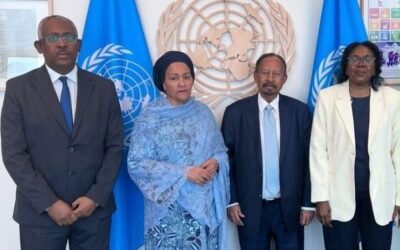

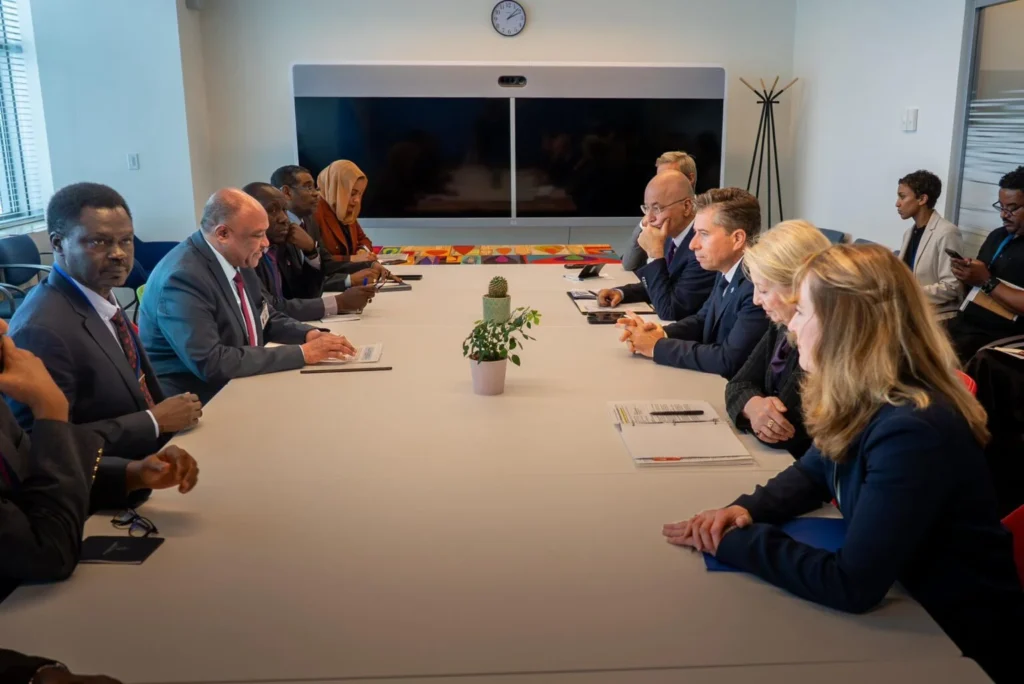
NEW YORK – U.N. humanitarian chief Tom Fletcher stressed the importance of keeping the Adre border crossing open for life-saving aid to Darfur following talks with Sudanese Foreign Minister Mohieddin Salem on prospects for peace and expanding humanitarian operations across Sudan.
Fletcher said in a post on X on Sept. 21, 2026, that the meeting covered what he described as the latest opportunities for peace, efforts to expand the United Nations’ humanitarian presence across Sudan and continued use of the Adre crossing.
The crossing links eastern Chad with West Darfur and has become one of the main routes for delivering cross-border assistance into Darfur as insecurity and fighting continue to restrict movement on internal roads.
The United Nations has repeatedly described humanitarian access as severely constrained by conflict, insecurity and administrative obstacles, and has previously welcomed extensions allowing aid movements through Adre.
Fletcher said maintaining access through the crossing was essential to sustaining assistance for people in Darfur. His post did not announce a new agreement on the crossing or specify how long its operation would continue.
The discussion also came amid broader diplomatic efforts over Sudan’s war, including recent talks involving Salem, Egyptian Foreign Minister Badr Abdelatty and U.S. adviser Massad Boulos focused on de-escalation and conditions for a political settlement.
Sudan’s war between the Sudanese Armed Forces (SAF) and the Rapid Support Forces (RSF) began in April 2023 and has displaced millions of people while disrupting health care, food supplies and other essential services.
Darfur has been among the regions hardest hit by fighting and displacement, increasing dependence on humanitarian access from neighboring Chad and on aid deliveries across conflict lines.
The U.N. has also continued to press for broader and more predictable humanitarian access across Sudan, including additional hubs, flights and cross-line routes.
Recent U.N. humanitarian updates have warned that continued military operations, including drone attacks, are causing civilian casualties and threatening critical infrastructure, while funding shortages remain a major constraint on relief operations.