
KHARTOUM – The leadership of the United Nations Department of Safety and Security in Sudan has returned to permanent operations from Khartoum for the first time since U.N. activities were relocated to Port Sudan in 2023, as the organization gradually expands its presence in the capital.
UNDSS said in its third-quarter 2026 newsletter that the move included the Chief Security Adviser, Deputy Security Adviser and head of the Security Information and Operations Cell, strengthening security risk management for a growing U.N. footprint in Khartoum.
The department had maintained a limited operational presence in the capital since July 2025, following an initial security assessment conducted in May that year.
Since then, UNDSS has monitored security conditions, assessed infrastructure and operating conditions and worked with U.N. agencies to determine whether essential services could support an expanding international presence.
Staff ceilings for national and international personnel were introduced during the transition to ensure the gradual increase remained consistent with contingency planning and security requirements.
Despite the return, UNDSS said significant risks remain, including limited security communications, unexploded ordnance and other remnants of war, as well as aerial threats.
The department said it was working to establish backup communication systems and cooperating with the U.N. Mine Action Service to strengthen explosive-ordnance risk education and training.
Drone Threats Disrupt Access to El Obeid
The newsletter also detailed continuing difficulties facing humanitarian operations outside Khartoum.
U.N. field missions to El Obeid were suspended from early June after fighting intensified along the Kosti-El Obeid corridor and inside the North Kordofan capital.
UNDSS said drone warfare had targeted critical infrastructure, including fuel depots, and significantly affected access to drinking water.
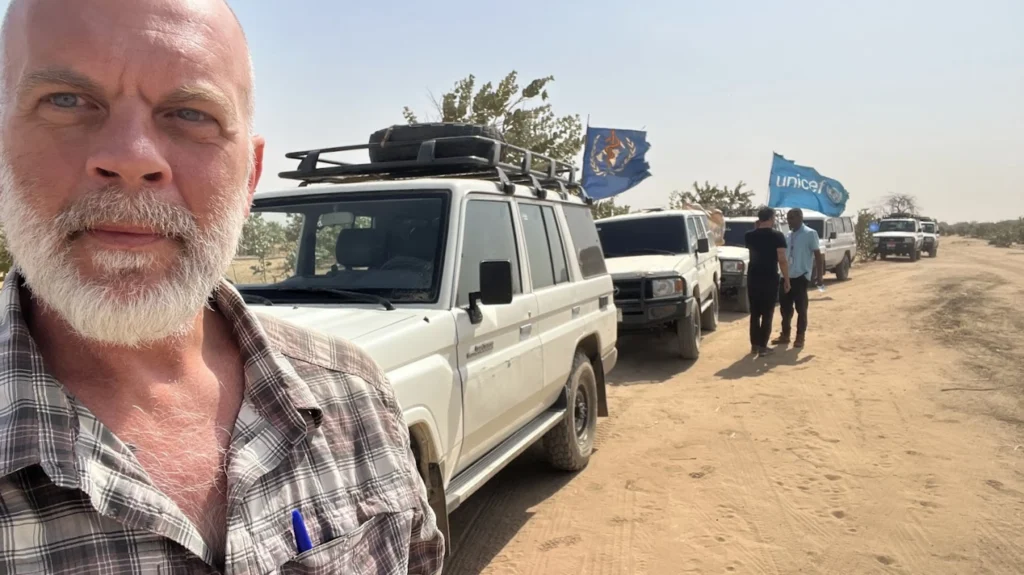
After weeks of security monitoring, risk analysis and planning, the department supported a mission to El Obeid on July 5 that included the Humanitarian Coordinator and the head of the OCHA office.
The convoy encountered burned-out commercial trucks and civilian vehicles along the route, which UNDSS said had been destroyed in recent drone strikes, as well as unexploded ordnance along parts of the road.
The mission initially focused on supporting U.N. personnel and more than 40 eligible dependants remaining in El Obeid. Food, water and medicines provided by their organizations were transported to the city amid shortages and high prices.
Between Sept. 13 and 20, UNDSS also supported a joint mission led by UNHCR to Rashad, Abassiya and Um Rawaba to assess conditions for humanitarian access and a more sustained presence.
Families fleeing violence told the mission they had spent more than 40 days travelling in search of safety, often with limited access to food, water and healthcare.
Conflict, damaged infrastructure and seasonal rains continued to complicate movement across the area.
UN Facilities Looted and Burned in Kauda
In Kauda, South Kordofan, UNDSS said a surge in violence in mid-August was accompanied by the looting and burning of facilities belonging to the United Nations and humanitarian partners.
The newsletter did not identify who was responsible.
Several locally recruited U.N. personnel and their families remained exposed to danger with limited options for reducing risk.
UNDSS said emergency measures were introduced allowing personnel and dependants to seek refuge outside central Kauda, while special reception arrangements were prepared for those able to cross south to Yida in South Sudan.
In Ad-Damazin, an escalation of violence along the southern axis of the city in early September triggered emergency security arrangements.
UNDSS said the measures were designed to protect personnel while allowing essential staff to continue operating and reaching displaced communities within a radius of about seven to 10 kilometres from the city.
The newsletter illustrates the changing security environment confronting humanitarian operations as front lines shift, infrastructure is damaged and access routes become increasingly unpredictable.
UNDSS carried out 33 field missions during the third quarter, processed 21,516 security clearances, analysed 272 incident reports and conducted 51 security assessments.
It also trained 863 U.N. Security Management System personnel and partners during the July-to-September period.
Chief Security Adviser Kwadwo Opong-Marfo said changing front lines and two consecutive years of budget cuts had forced the department to adapt how it operates, with greater reliance on coordination, local engagement and flexible approaches to maintaining humanitarian access.