
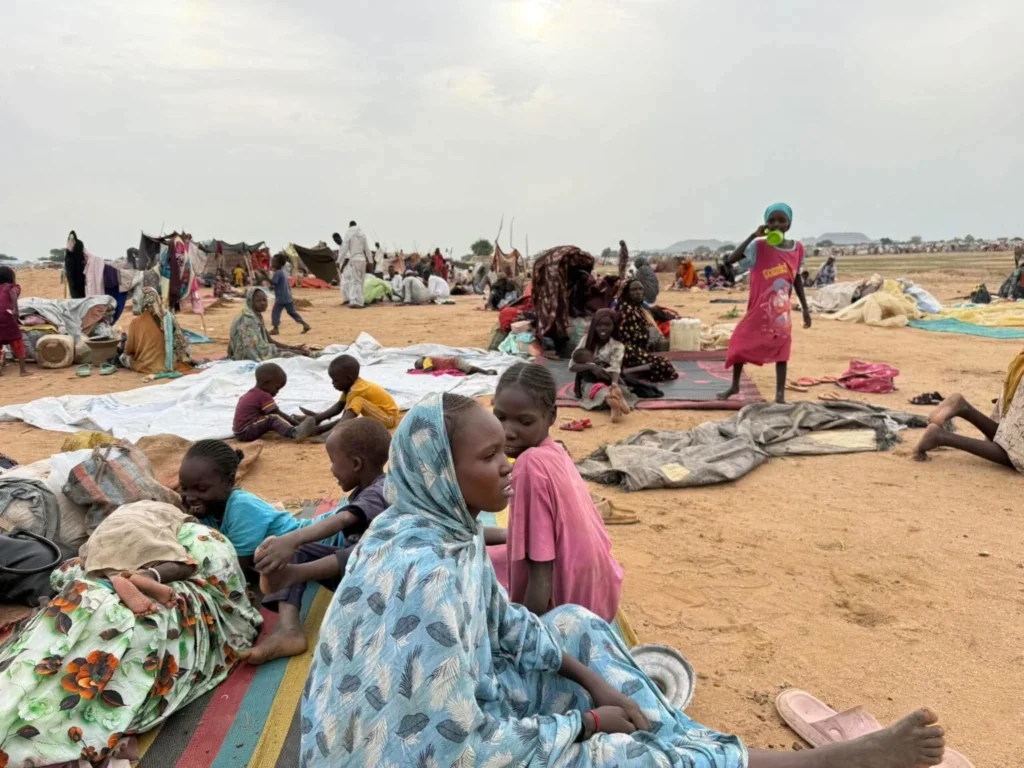
KHARTOUM – More than half of children assessed in Central Jebel Marra are chronically malnourished, while nearly one in six suffer from acute malnutrition, according to new data from Save the Children highlighting the combined impact of conflict, drought and collapsing basic services in one of Sudan’s most isolated regions.
The assessment found that 57% of children were stunted, meaning they had low height for their age due to chronic or recurrent undernutrition.
A further 15% were acutely malnourished, or wasted, reflecting recent or ongoing severe weight loss or failure to gain weight.
Save the Children said both forms of malnutrition can have lasting consequences for children’s health, physical development and cognitive growth.
The findings also showed that 43% of children assessed had been ill during the two weeks preceding the survey.
Access to safe water remains another major concern, with 69% of surveyed households relying on unsafe or untreated water.
Save the Children said the figures demonstrate that treating malnutrition alone will not be enough and called for an integrated response covering food security, healthcare, clean water, sanitation and disease prevention.
Conflict and Drought Deepen Crisis
Jebel Marra has traditionally been one of Darfur’s more fertile and productive agricultural areas, but the region has been severely affected by conflict, disrupted livelihoods and drought.
Save the Children said reduced rainfall associated with El Niño has damaged agricultural production and contributed to shortages of animal fodder, increasing pressure on both farming and pastoralist communities.
The latest findings come as food security conditions deteriorate across Sudan.
The Integrated Food Security Phase Classification recently warned that conflict, displacement and severe drought were increasing the risk of famine in parts of Greater Darfur and Greater Kordofan.
At least 19 million people across Sudan are facing acute food insecurity, equivalent to about two in every five people, while around 11 million have been forced from their homes by the war.
The conflict between the Sudanese Armed Forces and the Rapid Support Forces, which began in April 2023, has disrupted agriculture, markets, healthcare and humanitarian access across large areas of the country.
Darfur has been among the regions most severely affected, with communities facing repeated displacement, insecurity and restrictions on access to food and essential services.
Unsafe Water and Disease Risks
Save the Children warned that malnutrition in Jebel Marra is being compounded by poor access to healthcare and clean water.
With more than two-thirds of surveyed households depending on unsafe or untreated water, children face increased exposure to diseases that can further worsen nutritional conditions.
Illness and malnutrition can reinforce each other, particularly among young children whose bodies are already weakened by inadequate diets.
Save the Children said responses should therefore combine nutrition treatment with clean water, sanitation, healthcare and food assistance rather than treating each problem separately.
Crisis Extends Beyond Darfur
The organization said Sudan’s wider hunger crisis is also affecting communities outside Darfur.
In Gedaref, Save the Children highlighted the case of a seven-month-old boy diagnosed with severe acute malnutrition after becoming seriously ill.
The child received treatment at a stabilization centre supported by the organization and is now recovering.
Claire Henery, Save the Children’s country director in Sudan, said children were being hit by overlapping crises as conflict destroys livelihoods and drought deepens shortages.
She said the findings from Central Jebel Marra showed children facing both immediate acute malnutrition and the longer-term consequences of inadequate nutrition.
Save the Children called for a large-scale and sustained humanitarian response providing nutrition treatment, food security support, healthcare and clean water.
The organization said continued humanitarian access would also be critical to reaching children in isolated and conflict-affected communities.
Save the Children has launched a $300 million global humanitarian nutrition initiative covering 2026 to 2028, including programmes in Sudan, aimed at both treating and preventing child malnutrition in severe humanitarian crises.


