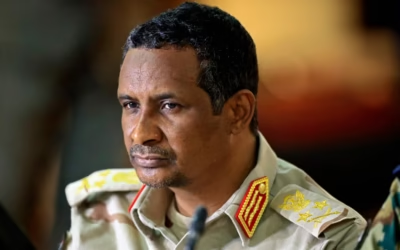
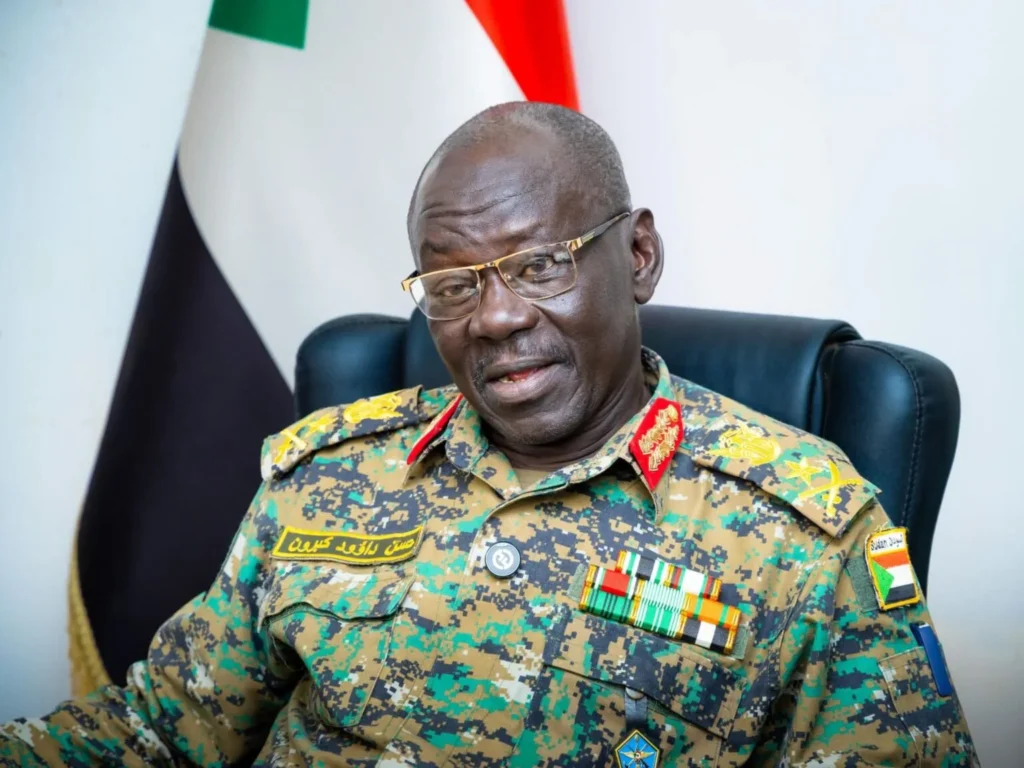
KHARTOUM – Sudan’s Defence Minister Hassan Daoud Kabroun has accused more than 20 countries of supporting the Rapid Support Forces (RSF) through financing, logistics, mercenaries and drones, describing the conflict as a foreign-backed war rather than an internal struggle for power.
Kabroun made the allegations in an interview with Sudan’s state news agency, saying outside actors were seeking to destroy Sudan, exploit its resources and alter its demographic composition.
He did not identify all of the countries he accused of involvement or provide independently verifiable evidence supporting the claim that more than 20 states were participating in the war.
Kabroun said Sudan’s Defence Ministry was seeking international relations based on respect for sovereignty, non-interference and adherence to international agreements.
He also criticized the United States over its refusal to issue Sovereignty Council Chairman Abdel Fattah al-Burhan a visa to attend the U.N. General Assembly, describing the decision as evidence of what he called shortcomings in international diplomacy.
Foreign Support and Mercenaries
Kabroun said Sudan had sought to persuade neighboring countries that the conflict was being sustained by external support for the RSF and political groups he linked to the paramilitary force.
He referred to the RSF, the Tasis alliance and the Sumoud coalition while discussing what he described as political and military networks operating against the Sudanese state.
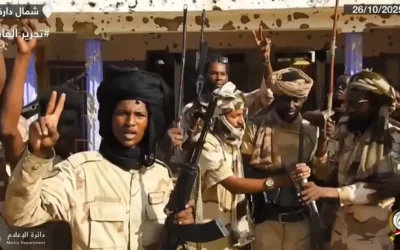
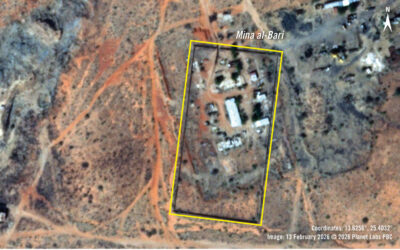
The minister said a Sudanese delegation attending a defence and security conference of the International Conference on the Great Lakes Region presented photographs and video footage that it said showed foreign training camps, weapons, military vehicles, drones and mercenaries being supplied to the RSF.
Kabroun said the presentation helped clarify Sudan’s position to participating governments, including on allegations concerning chemical weapons and the broader nature of the conflict.
The material described by the minister was not independently available for verification.
Sudanese authorities have repeatedly accused foreign actors of supporting the RSF during the war, while allegations of outside military assistance to different parties have become an increasingly prominent element of the conflict.
Army Reform and War Priorities
Kabroun said strengthening Sudan’s internal front and restructuring and developing the armed forces were among the main challenges he faced after taking office.
He listed training, military equipment, food and other services for forces participating in the conflict among the Defence Ministry’s immediate priorities.
The minister said the government’s current objective was to defeat what it describes as the rebellion and secure the country before moving toward the construction of a modern democratic state based on elections, constitutional government and transparency.
He also called for Sudan’s fragmented political landscape to be consolidated into three or four major political parties.
Economy and Returnees
Kabroun said restoring economic activity in relatively secure states was another priority, particularly as displaced Sudanese return to areas regained by the army.
He called for greater reliance on domestic production and Sudan’s own resources to support economic recovery during the conflict.
The war between the Sudanese Armed Forces (SAF) and RSF has continued since April 2023, devastating infrastructure, disrupting production and trade and forcing millions of people from their homes.
Foreign Nationals and Refugees
Kabroun also addressed the presence of undocumented foreign nationals in Sudan, alleging that some had entered the country to fight as mercenaries or participate in drug trafficking.
He called for people without legal status to be deported and urged Sudanese citizens not to shelter or employ foreigners without valid permits.
The minister also said refugees should return to their countries when the conditions that forced them to seek refuge no longer existed.
Kabroun said Sudan was also seeking stronger regional security cooperation, including the creation of a joint force through the Great Lakes regional framework to contribute to conflict resolution.
His allegations of support from more than 20 countries represent one of the broadest public claims by a senior Sudanese official about the scale of foreign involvement in the war.
The interview, however, did not provide a full list of the countries accused or detailed evidence allowing independent verification of the figure.