
KHARTOUM – At least 36 people were killed and more than 150 wounded after a drone strike attributed to the Sudanese Armed Forces hit a crowded market in Nyala, the capital of South Darfur, Médecins Sans Frontières (MSF) said.
The strike hit a busy market in western Nyala at around 8 p.m. on Oct. 26, causing widespread casualties among people gathered at the site, according to the medical charity.
A second strike hit a civilian neighbourhood in the city, MSF said.
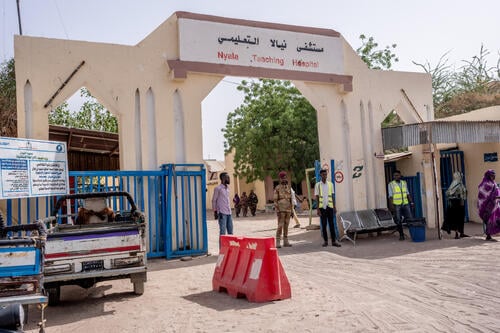
Nyala Teaching Hospital, which is supported by MSF, had received 36 bodies following the attacks, including 21 people who were wearing civilian clothing.
Medical teams also treated more than 150 wounded people in the emergency department, including women and children.
MSF staff reported patients arriving with shrapnel wounds, severe burns and facial injuries, with some transported from the market by tuk-tuks and donkey carts as medical teams worked through the night.
Dale Koninckx, MSF’s project coordinator in Nyala, said medical workers were deeply shaken by the scale of the casualties.
“This is appalling. Markets, homes, and key civilian infrastructure are not targets,” Koninckx said.
MSF called on all parties to Sudan’s conflict to protect civilians.
The organization attributed the strike to the Sudanese Armed Forces. The army had not publicly responded to the allegation in the information available at the time of the MSF update.
Nyala is under the control of the Rapid Support Forces (RSF), which has fought the Sudanese army since April 2023 and controls much of Darfur.
The latest attack follows another drone strike on Nyala’s Al-Mawashi market on Oct. 16 that killed at least four people and wounded several others, according to MSF.
The repeated attacks on markets have raised particular concern because they are among the main places where civilians obtain food and basic supplies at a time when malnutrition and food insecurity are worsening across Darfur.
Drone warfare has intensified sharply across Sudan in recent months, with both the SAF and RSF increasingly using long-range unmanned aircraft against targets far from conventional front lines.
The U.N. Human Rights Office said earlier this month that drone strikes killed at least 306 people across Sudan during the first three weeks of October alone and injured hundreds more.
Those attacks affected homes, markets, hospitals, displacement sites, electricity facilities and water infrastructure across Darfur, Kordofan, Blue Nile, Khartoum and other areas.
Nyala has repeatedly been affected by aerial attacks during the war as the city has emerged as one of the RSF’s most important political and military centres.
At the same time, RSF drone attacks have increasingly reached army-controlled areas.
In recent days, strikes attributed to the RSF have targeted electricity infrastructure in Khartoum, Gezira, Gedaref, Sennar and White Nile states, causing widespread disruptions to essential services.
The growing exchange of drone attacks has increased risks to civilians on both sides of the front lines, particularly when strikes hit densely populated areas or infrastructure used by the public.
International humanitarian law requires parties to distinguish at all times between military objectives and civilians and civilian objects, and to take all feasible precautions to minimize civilian harm.
MSF warned that attacks affecting markets and residential areas are adding another layer of danger for civilians already facing displacement, food shortages and the collapse of essential services.