

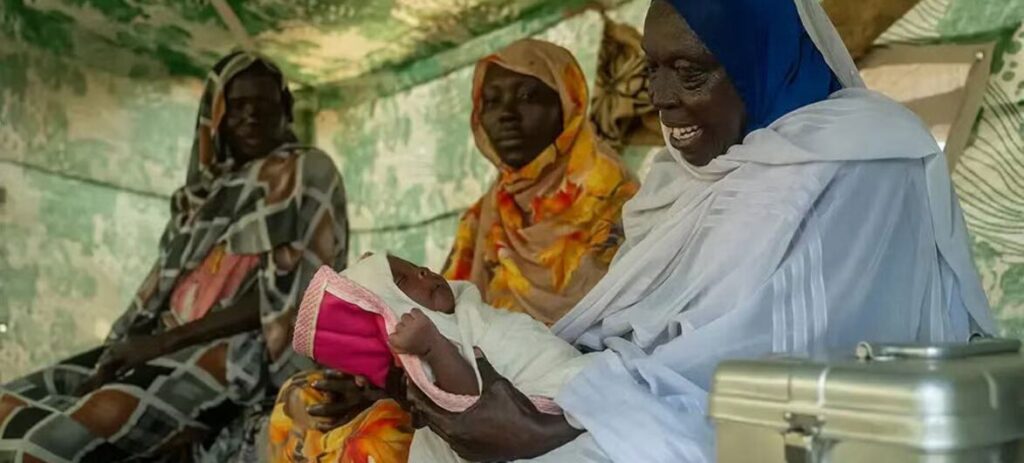
KHARTOUM – The United Nations Population Fund (UNFPA) warned that pregnant women in Sudan are facing life-threatening childbirth conditions as the country’s war continues to devastate health services and restrict access to emergency obstetric care.
In a statement, UNFPA highlighted the situation in Golo, a mountain town in Central Darfur, where only one hospital can perform caesarean sections for communities across a wide surrounding area.
Fabrizia Falcione, UNFPA’s representative in Sudan, said many women reach the hospital after walking for hours from mountain villages or being carried on wooden stretchers while already in labor or bleeding. Some can afford to travel by donkey, she said, but many arrive too late to save their lives or their babies.
The warning comes as Sudan’s war, which erupted in April 2023 between the Sudanese Armed Forces (SAF) and the Rapid Support Forces (RSF), continues to deepen the collapse of health services, particularly in Darfur, where displacement, insecurity and damaged infrastructure have left millions without reliable medical care.
UNFPA said Golo hospital is running short of essential supplies, including anesthesia drugs. Falcione said women often return to their mountain villages on foot only days after undergoing caesarean sections, underscoring the urgent need for mobile clinics closer to vulnerable communities.
The agency also warned of overwhelming needs in Tawila, about 100 kilometers from Golo across difficult mountain roads, where a vast displacement camp hosts hundreds of thousands of people fleeing the war.
Falcione said women in critical condition travel from Golo to Tawila for emergency childbirth care, but many arrive too late. She said medical facilities in Tawila and across Central and North Darfur are also facing shortages of oxytocin, a drug used to prevent deadly postpartum bleeding.
UNFPA said Tawila camp now hosts more than 700,000 people, with new families arriving daily and setting up temporary shelters across the desert.
Falcione called for reproductive health services to be decentralized and mobile medical teams expanded to reach the most isolated women. She also urged stronger support for local midwives, many of whom are paid in basic goods such as sugar and soap rather than money.
“A trained and properly equipped midwife can meet 90% of medical needs before, during and after childbirth,” she said.


