
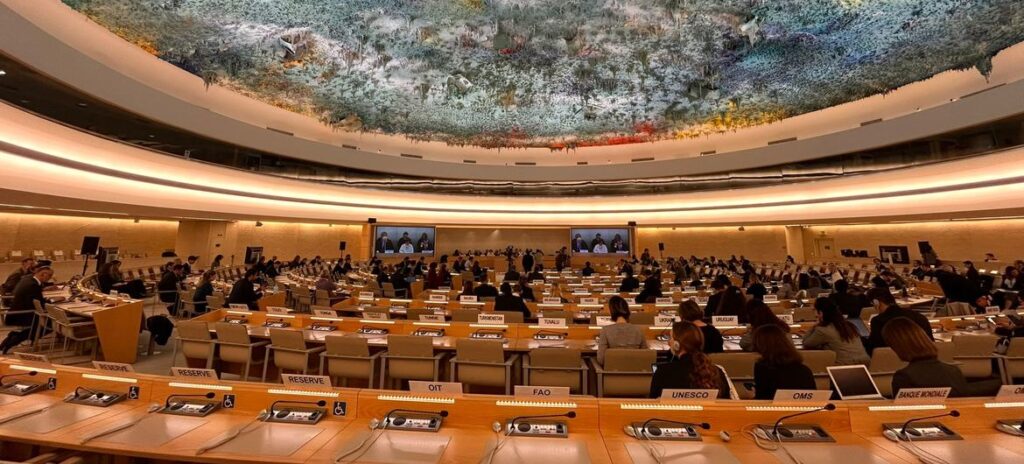
GENEVA – The United Nations Human Rights Council has extended the mandate of the Independent International Fact-Finding Mission for Sudan for another year, allowing the mission to continue investigating alleged human rights violations and violations of international humanitarian law committed during the country’s ongoing war.
The decision was included in resolution A/HRC/63/L.26, considered during the council’s 63rd session in Geneva. The text explicitly provides for a one-year extension of the mission’s mandate.
The resolution also requested the mission to provide an update on its work to the Human Rights Council at its 65th session, followed by an enhanced interactive dialogue involving a representative of Sudanese civil society.
It further requested a comprehensive report at the council’s 66th session and another presentation to the U.N. General Assembly at its 82nd session.
The council expressed deep concern over findings by the fact-finding mission that there were reasonable grounds to believe both the Sudanese Armed Forces (SAF) and the Rapid Support Forces (RSF) had committed violations of international human rights law and international humanitarian law, including through drone attacks, with some acts potentially amounting to war crimes.
The resolution strongly condemned reported violations committed across Sudan by parties to the conflict, including indiscriminate attacks on civilians, aerial bombardment, drone strikes, extrajudicial killings, sexual and gender-based violence, arbitrary detention, abductions, looting and restrictions on humanitarian access.
It also strongly condemned the impact of the RSF takeover of El Fasher, citing reported mass executions, ethnically targeted violence, torture, sexual violence and abductions. The resolution referred to findings by the fact-finding mission that some of those acts amounted to crimes against humanity and war crimes and could show indications of genocidal acts.
The council also expressed serious concern over escalating violence and the deteriorating humanitarian situation in Kordofan, particularly in and around El Obeid, warning of the risk of large-scale abuses against civilians.
The resolution said there was no military solution to Sudan’s crisis and called for an immediate and comprehensive ceasefire without preconditions, an independent ceasefire-monitoring mechanism and an inclusive Sudanese-led political process leading toward a democratically elected national government after a civilian-led transition.
It also called for full implementation of the Jeddah Declaration on the Protection of Civilians, including safe, rapid and unhindered humanitarian access across borders and conflict lines.
The resolution condemned external intervention that it said was fueling the conflict, including the supply of weapons and military equipment, the deployment of foreign personnel and mercenaries, and military or material support to parties to the war.
It called on states and other actors to respect Sudan’s unity and territorial integrity, comply with the existing U.N. arms embargo on Darfur and halt military and material support to all parties to the conflict.
The council also urged all parties and states to respect Sudan’s unity and territorial integrity and rejected the establishment of a parallel governing authority in areas controlled by the RSF.
On accountability, the resolution called for independent, impartial and credible investigations into alleged abuses by all parties and stressed the importance of preserving evidence.
It also noted the role of the International Criminal Court and referred to the fact-finding mission’s call for the court’s jurisdiction to be expanded beyond Darfur to cover Sudan as a whole.
The resolution requested the U.N. Secretary-General to provide the resources, expertise and logistical support needed for the mission to carry out its work and called on all parties to the conflict, states and other relevant actors to cooperate with the mission and provide relevant information and documentation.


