
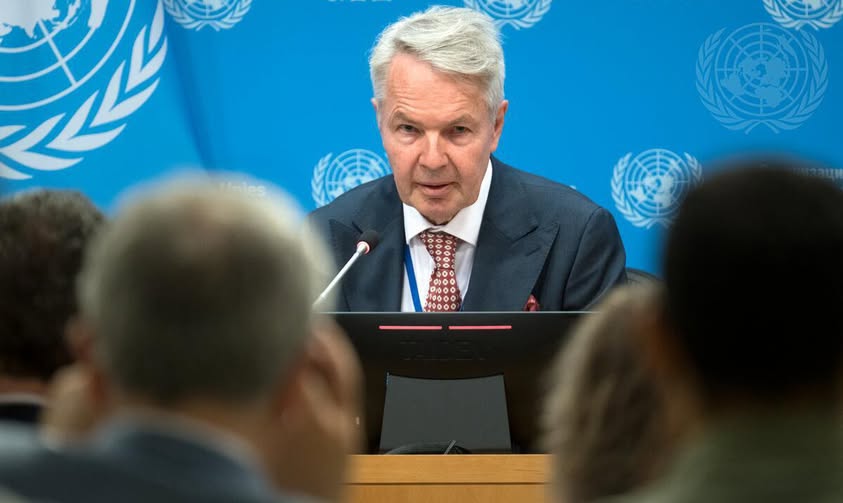
NEW YORK – U.N. Secretary-General’s Personal Envoy for Sudan Pekka Haavisto said intensive diplomatic efforts are underway to find a peaceful end to the war, but warned that both sides still appear focused on improving their military positions before entering direct negotiations.
Haavisto’s comments came as the Sudanese Armed Forces (SAF) announced on Friday that it had retaken Sodari in North Kordofan following fighting with the Rapid Support Forces (RSF), extending a series of recent army advances in the state.
The army said its forces captured Sodari after what it described as fierce battles and inflicted losses on the RSF. The scale of the reported casualties and the extent of battlefield control could not be independently verified.
The advance follows weeks of operations by the army and allied forces across North Kordofan, including reported gains around Bara, Jabra al-Sheikh, Umm Sayala and areas west and northwest of El Obeid.
The SAF also said on Sept. 24 that its air defenses shot down two long-range FH-95 drones in North Kordofan as drone warfare intensified alongside ground operations.
Against that military backdrop, Haavisto said international diplomatic activity over Sudan had accelerated, pointing to coordination among regional and international actors seeking a ceasefire and political settlement.
He said there was reason for limited optimism because of the scale of diplomatic engagement, but cautioned that battlefield calculations continued to complicate efforts to bring the warring parties to negotiations.
According to Haavisto, reaching an agreement will require engagement beyond SAF chief Abdel Fattah al-Burhan and RSF commander Mohamed Hamdan Dagalo, known as Hemedti, because both camps include other armed and political actors with influence over the conflict.
He cited the presence of figures and forces aligned with the competing camps as one reason why any eventual settlement would require broader negotiations.
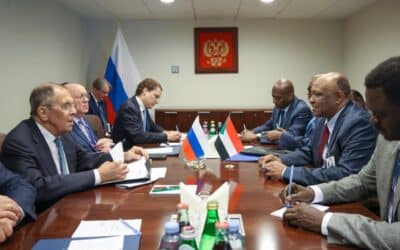
Haavisto said the United Nations was currently pursuing shuttle diplomacy, with neither side yet ready to sit together at the same negotiating table.
He said both camps nevertheless remained willing to communicate separately with U.N. mediators, describing that engagement as a limited but potentially useful opening.
The envoy said recent discussions had also focused on confidence-building measures, including the fate of civilian detainees, possible prisoner exchanges and the release of civilians held during the conflict.
He said mechanisms had been established on both sides to discuss such issues with the United Nations.
Haavisto also warned about the growing use of drones in the war, saying increasingly sophisticated systems were being used in attacks that affect civilians and civilian infrastructure, including aid operations, schools and hospitals.
He called for efforts to stop the flow of weapons into Sudan, particularly drones, arguing that continued weapons supplies were increasing risks to civilians and prolonging the conflict.
The envoy also highlighted the danger from unexploded ordnance in Khartoum, saying he had been told during his recent visit that only a small fraction of explosive remnants had so far been cleared.
Diplomatic efforts are proceeding alongside initiatives for an intra-Sudanese dialogue, with political and civilian groups divided over whether such a process should begin while fighting continues.
Some groups have backed a Sudanese-led dialogue, while others argue that an effective ceasefire and humanitarian measures should come first.
International mediators have increasingly emphasized a humanitarian truce, civilian protection, unrestricted aid access and an inclusive Sudanese-owned political process as key elements of efforts to end the war.
Haavisto said the conflict also posed growing risks to neighboring countries because of continued refugee movements and wider regional pressures.
He stressed that women, young people and civil society groups should play a role in any political process, noting the contribution of community initiatives and emergency response groups during the war.
The envoy said the parties were still not ready for direct negotiations but described their willingness to engage separately through U.N. shuttle diplomacy as a small step that could be built upon.