
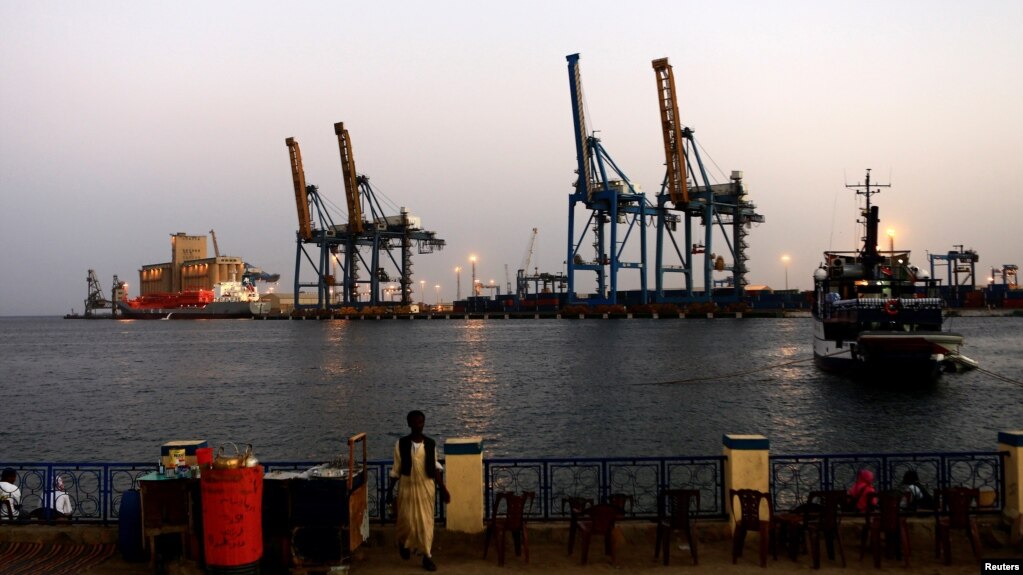
PORT SUDAN – Sudan is moving to revive the Abu Amama port project on the Red Sea through a proposed partnership with a Chinese port company, nearly two years after scrapping an earlier agreement with the United Arab Emirates.
Hassan Jaafar, deputy director-general of Sudan’s Sea Ports Corporation, said preparations were at an advanced stage for developing a new port at Abu Amama in cooperation with a major Chinese company specializing in port construction and operations.
Jaafar said studies were expected to be completed ahead of plans for the port to become operational by the end of 2027.
The announcement marks a new attempt to develop Abu Amama after Sudan cancelled a memorandum of understanding with UAE-based AD Ports Group and Invictus Investment in November 2024.
The previous project had been announced as part of an investment package worth about $6 billion, covering the port as well as an economic zone and agricultural projects.
Finance Minister Gibril Ibrahim said at the time that the memorandum was not legally binding on Sudan and that the government had decided to terminate it amid deteriorating relations between Khartoum and Abu Dhabi.
The earlier Abu Amama plan envisaged a major new Red Sea port roughly 200 kilometers north of Port Sudan, alongside transport, agricultural and economic infrastructure.
The Sea Ports Corporation has not disclosed the name of the Chinese company involved in the latest proposal or the value and financing structure of the new project.
It also remains unclear whether the Chinese partnership would revive the original Abu Amama development plan or introduce a substantially different design and investment framework.
Jaafar separately rejected reports that Sudan was considering privatizing its seaports, saying proposed partnerships remained subject to approval by the state and relevant authorities.
He said previous proposals involving privatization had been rejected at senior levels of government.
The official also said studies had been approved for transforming the Sea Ports Corporation into a National Maritime Authority, which would serve as the country’s official maritime authority.
On port modernization, Jaafar said full automation had yet to begin because it required specialized studies and substantial financing.
Sudanese ports continue to rely heavily on human labor for cargo handling, loading and unloading, he said.
Jaafar said the war had not caused significant physical damage to port infrastructure, machinery or buildings, but had sharply affected foreign trade as production areas were disrupted and some importers withdrew from the market.
He said port activity had since recovered and that the authority was applying a “Zero Ship Waiting” policy aimed at allowing vessels to unload and depart without unnecessary delays.
Alongside Abu Amama, the corporation is also considering plans to add a new container berth at the Green Port through strategic partnerships.
The proposed Chinese partnership comes as Sudan seeks investment in transport and trade infrastructure while attempting to restore economic activity disrupted by more than three years of war.