

KHARTOUM – Sudan has stepped up preparedness for cross-border disease threats, with a focus on early detection and laboratory response to Ebola and dengue, as a major outbreak of Bundibugyo virus disease continues to expand in the Democratic Republic of the Congo.
The National Public Health Laboratory has launched an eight-day training programme on molecular testing for Ebola, with technical and operational support aimed at strengthening preparedness in high-risk states and at points of entry.
The training targets health workers in Khartoum, Red Sea, White Nile and Gedaref states, as well as border and entry points, with the aim of improving laboratory diagnosis and early detection of suspected cases.
The measures come as the Bundibugyo outbreak in the Democratic Republic of the Congo has spread across 63 health zones in seven provinces, including Dungu in Haut-Uélé, near the South Sudan border.
As of Sept. 20, the outbreak had reached 7,733 confirmed cases and 3,732 deaths, while newer figures published days later showed the toll continuing to rise.
The geographical expansion has increased concern over the risk of cross-border transmission, particularly in a region marked by conflict, displacement and high population movement.
Ebola is a severe viral disease that spreads mainly through direct contact with the blood or body fluids of an infected person, or with the body of someone who has died from the disease.
Symptoms can begin with fever, fatigue, headache, muscle pain and sore throat before progressing to vomiting, diarrhea and, in severe cases, life-threatening complications.
Early detection, isolation, appropriate clinical care and strict infection prevention measures are critical to limiting transmission.
Sudan’s preparedness measures also reflect the country’s previous experience with related Ebola viruses. Sudan has recorded past outbreaks of Sudan virus disease, another member of the ebolavirus group.
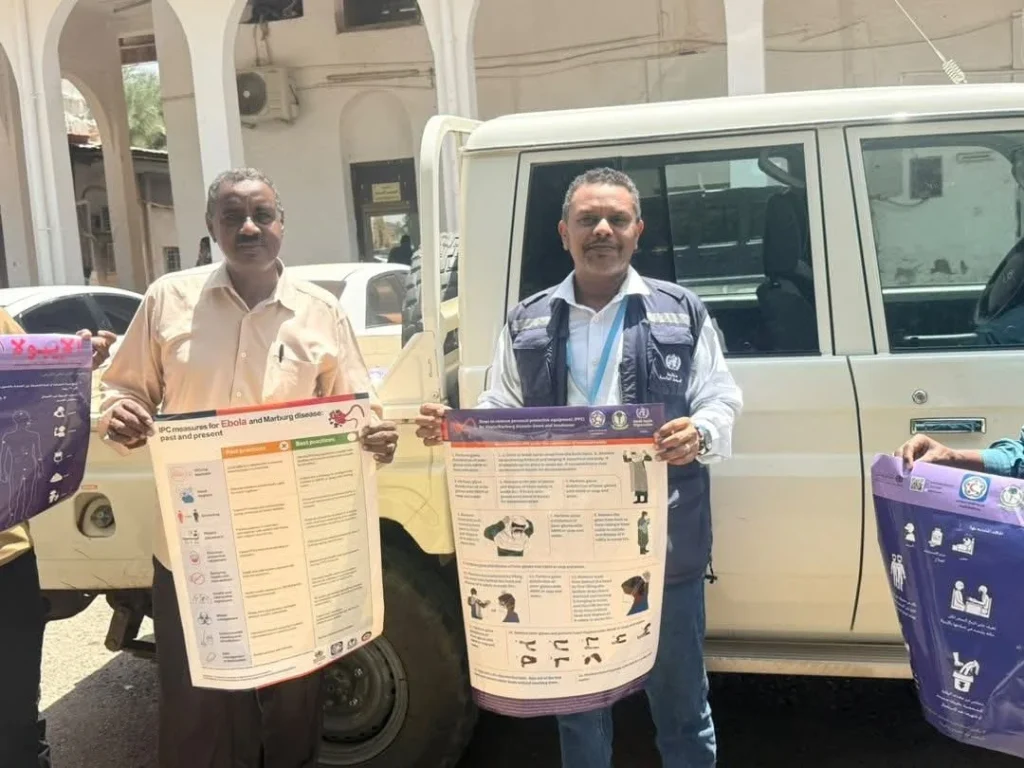
The latest support also includes public information and infection-prevention materials covering both Ebola and dengue, along with guidance for case management and health facility preparedness.
Health authorities are also working to strengthen laboratory readiness, surveillance and response capacity as part of broader preparedness for high-risk infectious diseases.
The measures are particularly important in a country facing large-scale displacement, damaged health infrastructure and frequent movement across borders.
There is currently no confirmed Ebola outbreak in Sudan based on the information reviewed. The measures announced are focused on preparedness, early detection and response should suspected cases emerge.