

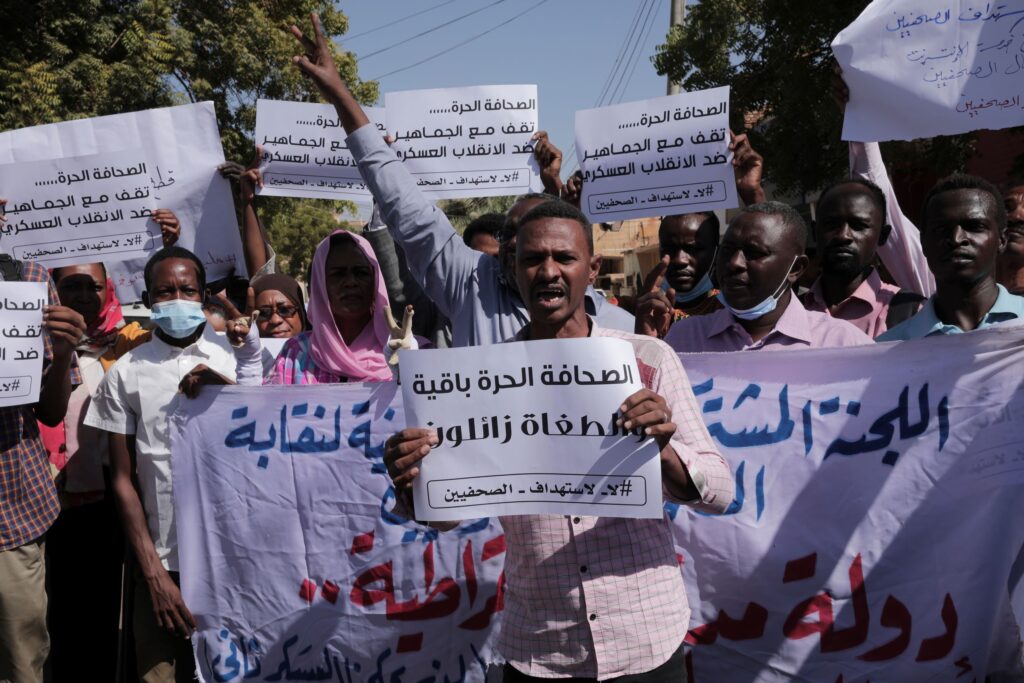
KHARTOUM – The Sudanese Journalists Syndicate has rejected a recent amendment to the country’s Criminal Act and the creation of a national cybercrime mechanism, warning that both measures could expand legal restrictions on journalism, online publishing and freedom of expression.
The syndicate’s Freedom Secretariat said in a statement on Thursday that explicitly including publication through electronic and media platforms in a criminal provision concerning the constitutional order could expose journalists to prosecution over reporting, investigations and coverage of alleged violations.
The amendment was introduced under Temporary Decree No. 7 of 2026 and added the phrase “including publication through electronic or media platforms” to a provision of Sudan’s 1991 Criminal Act dealing with acts aimed at undermining the constitutional order.
The provision already carried penalties of up to death or life imprisonment, as well as possible confiscation of property. The latest amendment did not introduce those penalties but expressly extended the provision to electronic and media publication.
The syndicate said applying such a serious criminal provision to publishing without clear safeguards for legitimate journalism could encourage self-censorship and restrict public access to information.
It argued that protecting national security should not be used to criminalize journalistic coverage or criticism simply because it addresses public affairs or scrutinizes government institutions.
The statement also rejected the establishment of the National Mechanism to Combat Cybercrime, which Prime Minister Kamil Idris ordered formed on Oct. 19 under the chairmanship of an assistant attorney general.
The mechanism includes representatives of relevant state institutions and is tasked with combating cybercrime and what authorities describe as harmful publication affecting state and public security.
Its responsibilities also include monitoring content published by media outlets and social media platforms and taking preventive and legal action, including initiating cases on behalf of the state.
The journalists’ syndicate warned that such powers could open the door to increased monitoring of journalists and pressure on independent media organizations.
The union said it did not oppose efforts to combat genuine cybercrime or protect society from digital threats, but argued that such measures must be implemented within clearly defined legal limits and with protections for fundamental rights.
It specifically warned against broadly defined terms such as “harmful publication,” saying vague language could expand the scope of criminal liability and be used against independent voices.
The concerns come amid increasing legal pressure on Sudanese journalists under cybercrime legislation, with reporters facing complaints and criminal proceedings over publications concerning government performance, corruption allegations and other matters of public interest.
The syndicate called for the amendment covering electronic and media publication to be repealed and for the decision establishing the cybercrime mechanism to be withdrawn.
It also urged a review of Sudan’s Cybercrime Law and its amendments to strengthen protections for freedom of expression and privacy, while calling for an end to official interference in editorial work and guarantees that journalists can perform their duties without intimidation or prosecution for legitimate professional activity.
The syndicate called on rights organizations, professional associations and international press freedom bodies to respond to legislation and measures it said threatened freedom of expression and journalism in Sudan.
It said publishing information, scrutinizing public officials and exposing corruption and abuses were fundamental functions of journalism, arguing that an independent press and access to information were essential to transparency and the rule of law.


