

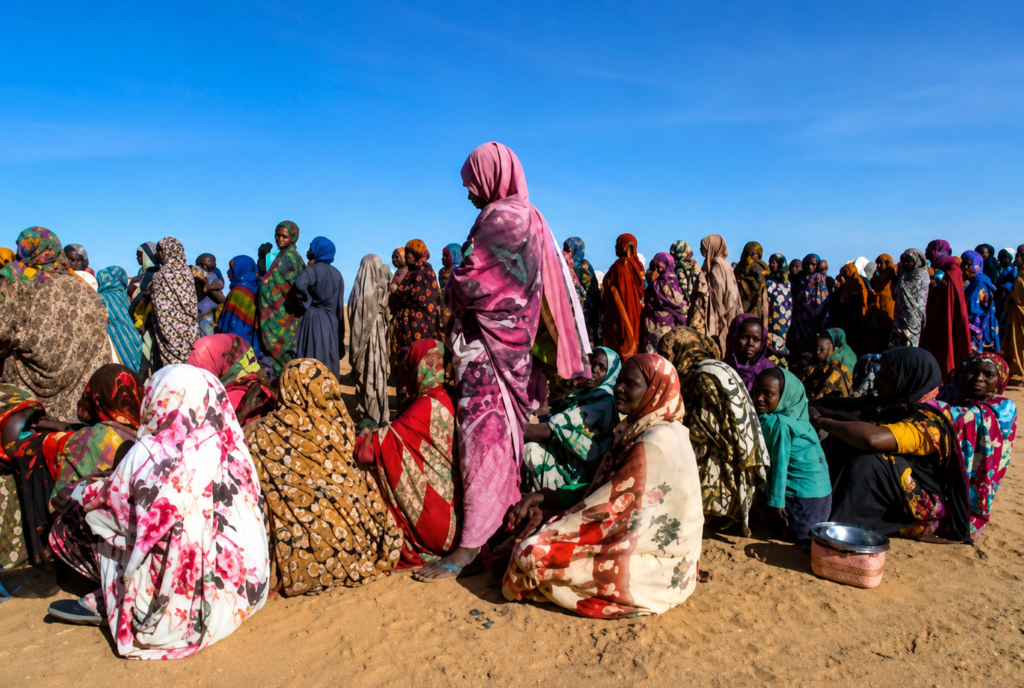
AL-MALHA – The General Coordination for Displaced Persons and Refugees warned of what it described as a forgotten humanitarian disaster in Al-Malha, North Darfur, saying thousands of families are facing hunger, disease and total isolation from humanitarian assistance.
In an urgent statement issued on August 31, the coordination said Al-Malha has become a stark example of Sudan’s wider humanitarian collapse, with no local harvests available to ordinary residents, the main road closed, and the town cut off from aid and emergency intervention.
The group said about 6,200 children in the area are suffering from malnutrition, including around 1,500 children with severe acute malnutrition that directly threatens their lives.
It also said about 1,350 pregnant and breastfeeding women are suffering from malnutrition and face the risk of death because of poor nutrition and lack of health care.
The statement said tuberculosis, anemia and diarrhea are spreading with little response, while available medicines are extremely limited and found only with some private pharmacists.
The coordination said no humanitarian organizations are present in the area, while displaced people are scattered across separate centers without adequate food, water, medicine or safe shelter.
It warned that reliance on unsafe water sources is increasing the spread of disease and deepening daily suffering, while hunger, illness and fear are causing severe psychological and social damage to families and threatening the future of a generation without education or security.
“Al-Malha today represents a concentrated image of a comprehensive humanitarian collapse affecting all of Sudan,” the statement said.
The warning comes as North Darfur continues to face severe humanitarian pressure from Sudan’s war, which erupted in April 2023 between the Sudanese Armed Forces (SAF) and the Rapid Support Forces (RSF). Fighting, blocked roads, insecurity and collapsing services have left many communities difficult to reach, especially in remote areas.
Humanitarian access in Darfur has remained one of the most urgent challenges of the war. Aid agencies have repeatedly warned that insecurity, lack of safe corridors, funding shortages and administrative obstacles are preventing life-saving assistance from reaching people in need.
The General Coordination called on the United Nations and international organizations to break what it described as the isolation imposed on Al-Malha and send urgent emergency teams.
It urged the World Food Programme to immediately provide food for children and women, and called on medical organizations to send health convoys to respond to tuberculosis, anemia, malaria, diarrhea and malnutrition.
The group also called on the international community to pressure parties to open roads and guarantee the delivery of humanitarian aid without obstruction.
It further demanded an independent international investigation into violations it said had contributed to the humanitarian collapse in the area.
“Every minute of delay is a death sentence for innocent children and women,” said Adam Rojal, spokesperson for the General Coordination for Displaced Persons and Refugees.
He said Al-Malha is not only a humanitarian crisis but “a moral test” for the international community, calling for urgent action to save lives.


