Introduction
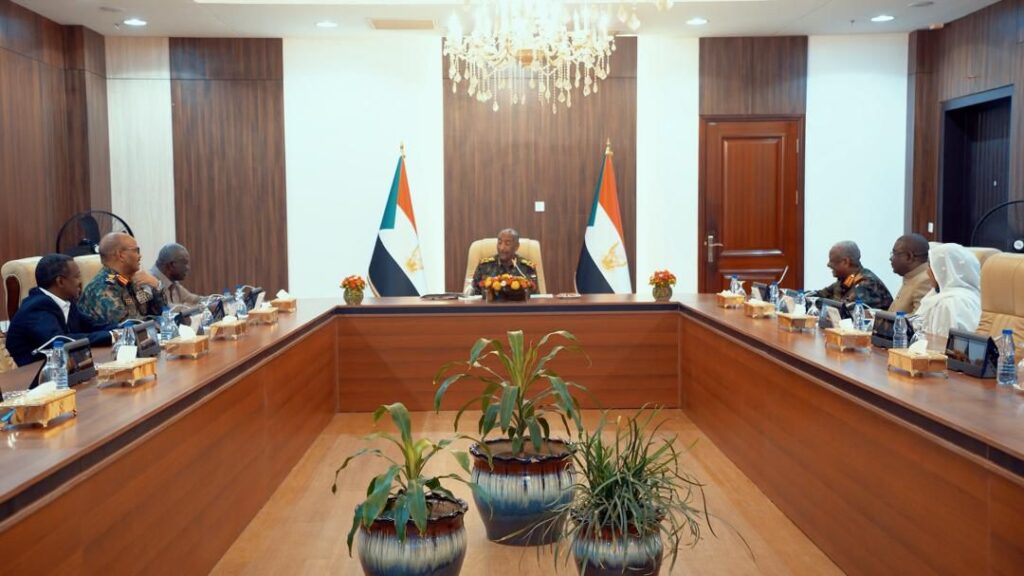
The Sovereignty Council of Sudan is the country’s collective head of state during the transitional period established after the 2019 political transition. It was created under the Constitutional Declaration signed in August 2019 to perform the constitutional functions of the presidency until the adoption of a permanent constitutional framework.
The Council represents the sovereignty of the Sudanese state, appoints senior officials in accordance with constitutional procedures and performs ceremonial and constitutional duties assigned by law. Since its establishment, its composition and powers have evolved through constitutional amendments and political developments, including changes resulting from the Juba Peace Agreement and subsequent political events.
As one of Sudan’s principal constitutional institutions, the Sovereignty Council has played a central role in the country’s political transition, peace process and state administration.
Overview
The Sovereignty Council serves as Sudan’s collective head of state rather than a single president. It was established to guide the country during the transitional period following the removal of President Omar al-Bashir in April 2019.
Its responsibilities include representing Sudan internationally, approving key constitutional appointments, issuing decrees in accordance with the Constitutional Declaration and working with other state institutions during the transition.
The Council functions alongside the executive branch led by the Prime Minister and within the broader constitutional framework governing Sudan’s transitional institutions.
Background
The idea of a collective head of state emerged during negotiations between Sudan’s Transitional Military Council and the Forces of Freedom and Change following the 2019 revolution.
Rather than immediately restoring a traditional presidential system, the parties agreed to establish the Sovereignty Council as a transitional institution intended to balance civilian and military participation while overseeing the country’s transition toward democratic governance.
The Council officially came into existence after the signing of the Constitutional Declaration on 17 August 2019.
Constitutional Basis
The Sovereignty Council derives its authority from Sudan’s Constitutional Declaration of 2019 and subsequent constitutional amendments.
The Constitutional Declaration defines the Council’s constitutional status, responsibilities and relationship with the executive and judicial branches. Amendments adopted following the Juba Peace Agreement and later political developments modified aspects of its composition and authority.
Its mandate continues within Sudan’s transitional constitutional framework until replaced by arrangements established under a permanent constitution.
Role of the Sovereignty Council
The Sovereignty Council serves as Sudan’s highest constitutional authority during the transitional period.
Its responsibilities include representing the state, approving constitutional appointments, receiving foreign ambassadors, ratifying international agreements where required, issuing constitutional decrees and performing other functions assigned under the Constitutional Declaration.
The Council also participates in major national decisions affecting governance, constitutional implementation and the political transition.
Relationship with the Prime Minister
The Sovereignty Council is distinct from the executive branch headed by the Prime Minister.
While the Prime Minister is responsible for managing government policy and supervising ministries, the Sovereignty Council performs constitutional functions associated with the head of state.
The Constitutional Declaration establishes separate responsibilities for each institution while requiring cooperation on matters affecting national governance and constitutional implementation.
Composition of the Council
The composition of the Sovereignty Council has changed during Sudan’s transitional period in response to constitutional amendments, political agreements and major national developments.
When first established in August 2019, the Council consisted of military and civilian members selected under the Constitutional Declaration. Following the signing of the Juba Peace Agreement in 2020, additional members representing signatory armed movements joined the Council through constitutional amendments intended to broaden political participation.
As Sudan’s political transition evolved, the Council’s membership continued to change in accordance with constitutional decisions and political developments.
Appointment Process
Members of the Sovereignty Council are appointed according to the Constitutional Declaration and any subsequent constitutional amendments or political agreements governing the transitional period.
Changes in membership have occurred through constitutional procedures adopted during Sudan’s transition, including appointments resulting from peace agreements and political settlements.
The method of appointment is therefore determined by the prevailing constitutional framework rather than through direct public elections.
Powers and Responsibilities
The Sovereignty Council performs constitutional functions assigned to the head of state during Sudan’s transitional period.
Its principal responsibilities include:
• Representing the Republic of the Sudan internationally.
• Appointing senior constitutional officials in accordance with applicable constitutional procedures.
• Receiving foreign ambassadors and diplomatic credentials.
• Ratifying laws and constitutional amendments where required.
• Declaring states of emergency in accordance with constitutional procedures.
• Approving certain international agreements.
• Performing ceremonial functions associated with the head of state.
• Supporting implementation of the Constitutional Declaration and transitional arrangements.
Changes Following the Juba Peace Agreement
The Juba Peace Agreement, signed in October 2020, resulted in important constitutional amendments affecting the composition of Sudan’s transitional institutions, including the Sovereignty Council.
Representatives of signatory armed movements were incorporated into the Council as part of the agreement’s power-sharing arrangements. These changes were intended to increase political inclusion and strengthen representation of regions affected by armed conflict.
The amendments reflected one of the most significant institutional changes introduced during Sudan’s transitional period.
Political Developments After October 2021
Sudan’s political crisis in October 2021 significantly affected the operation of the Sovereignty Council and other transitional institutions.
Subsequent constitutional decisions altered the structure of the transitional government and reshaped the relationship between civilian and military authorities. These developments influenced the Council’s role within Sudan’s evolving political framework and became the subject of continued domestic and international discussion.
The political transition has remained fluid since that period, with further institutional adjustments occurring as national circumstances changed.
Role During the Sudan War
Since the outbreak of armed conflict between the Sudanese Armed Forces (SAF) and the Rapid Support Forces (RSF) in April 2023, the Sovereignty Council has continued to function as one of Sudan’s principal constitutional institutions.
During the conflict, the Council has participated in decisions relating to national governance, foreign relations, humanitarian coordination and international diplomacy while operating under exceptional security conditions.
Its activities have reflected the broader challenges facing Sudan’s state institutions during the ongoing conflict, including the continuity of government, diplomatic engagement and efforts to maintain constitutional authority.
Current Status
The Sovereignty Council remains Sudan’s collective head of state under the country’s transitional constitutional framework.
Its role continues to evolve alongside Sudan’s political transition and ongoing conflict. The Council operates within the constitutional arrangements currently governing the state while participating in discussions concerning future political settlements, constitutional reform and post-conflict governance.
The long-term structure and authority of the institution are expected to be determined through Sudan’s future constitutional process.
Timeline
11 April 2019 – President Omar al-Bashir is removed from office following months of nationwide protests.
5 July 2019 – Political forces and the Transitional Military Council reach a political agreement establishing a transitional governing framework.
17 August 2019 – The Constitutional Declaration is signed, providing the legal basis for the Sovereignty Council.
21 August 2019 – The Sovereignty Council is officially established and sworn into office.
October 2020 – The Juba Peace Agreement leads to constitutional amendments and the appointment of additional members representing signatory armed movements.
October 2021 – Sudan’s political crisis results in major institutional changes affecting the Sovereignty Council and the transitional government.
April 2023 – Armed conflict between the Sudanese Armed Forces (SAF) and the Rapid Support Forces (RSF) begins, with the Council continuing to function under wartime conditions.
Present – The Sovereignty Council remains Sudan’s collective head of state under the transitional constitutional framework.
Frequently Asked Questions
What is the Sovereignty Council of Sudan?
The Sovereignty Council is Sudan’s collective head of state established during the transitional period following the 2019 political transition.
Why was the Sovereignty Council created?
It was established under the Constitutional Declaration to oversee the transitional period until Sudan adopts a permanent constitutional system.
Who appoints the members of the Sovereignty Council?
Members are appointed according to the Constitutional Declaration and subsequent constitutional amendments or political agreements governing the transitional period.
Is the Sovereignty Council the government?
No. The Council serves as the collective head of state, while the executive branch is led by the Prime Minister and the Council of Ministers.
What are the main responsibilities of the Council?
Its responsibilities include representing the state, appointing constitutional officials, receiving ambassadors, approving certain constitutional decisions and performing the functions of the head of state.
How did the Juba Peace Agreement affect the Council?
The agreement expanded the Council’s membership by adding representatives of signatory armed movements through constitutional amendments.
How has the Sudan war affected the Council?
The conflict that began in April 2023 has affected the operation of all state institutions, including the Sovereignty Council, which continues to function under exceptional circumstances.
Will the Sovereignty Council become a permanent institution?
The Council is a transitional institution. Sudan’s future constitutional arrangements will determine the country’s permanent system of government.
Sources
This guide is based on publicly available information from:
• Constitutional Declaration of Sudan (2019) and subsequent amendments
• Government of Sudan
• Sovereignty Council of Sudan
• Ministry of Justice of Sudan
• United Nations (UN)
• African Union (AU)
• Intergovernmental Authority on Development (IGAD)
• International Crisis Group (ICG)
• United States Institute of Peace (USIP)
• Encyclopaedia Britannica
• Academic research on Sudan’s constitutional transition
Further Reading
• Prime Minister of Sudan
• Constitution of Sudan
• Comprehensive Peace Agreement (CPA)