
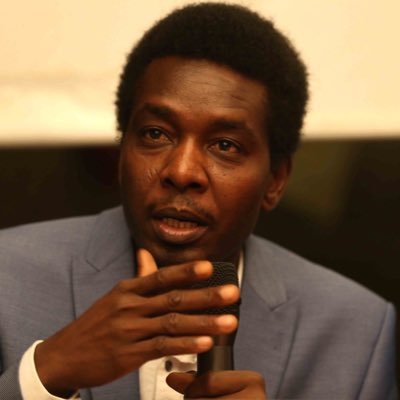

KHARTOUM – Darfur Governor and Sudan Liberation Movement leader Minni Arko Minawi accused unnamed countries and political actors of working to prevent Sovereign Council Chairman Abdel Fattah al-Burhan from participating in the United Nations General Assembly, while rejecting efforts he said would deny Sudanese people weapons needed for self-defense.
Speaking to crowds of citizens and officials after returning from New York, Minawi said the United States itself was not against Sudan, but accused individuals of withholding what he described as the truth from the U.S. administration.
“America did not stand against us, and we will not stand against America,” Minawi said, adding that his opposition was directed at individuals he accused of concealing facts from Washington.
He also accused unnamed countries of playing what he called “dirty roles” through their diplomacy, alongside political groups and individuals presented internationally as representatives of Sudanese civilian forces. He did not identify the countries or individuals he was referring to.
Burhan had been expected to deliver Sudan’s address to the 81st session of the U.N. General Assembly, but Foreign Minister Mohieddin Salem spoke in his place. Salem told the General Assembly that the United States, as host country, had not issued Burhan the entry visa required for him to attend despite efforts by the U.N. Secretariat and Secretary-General António Guterres. The U.N. secretary-general also expressed regret over the visa issue.
Sudan requested that the matter be formally documented and examined through U.N. mechanisms responsible for implementation of the headquarters agreement governing the obligations of the host country.
Minawi said preventing Burhan from attending would have “very serious repercussions,” adding that the reception he received on his return was not for him personally but for Sudan.
He also criticized groups described as civilian political forces, arguing that a small number of individuals could not claim to represent Sudan’s civilian population. In his remarks, he used the term “agents” to describe some of those figures.
Minawi praised Sudanese demonstrators who gathered in Washington and outside the United Nations and Security Council, saying they had mobilized to make their views heard after, in his account, Sudan’s position was prevented from being fully presented inside international forums.
On military supplies, Minawi rejected restrictions that he said would leave Sudanese people unable to defend themselves.
He compared restrictions on weapons available to Sudanese forces and communities with the possession by other countries of nuclear, cyber, chemical and biological capabilities.
Minawi said Sudanese people should not be denied weapons such as Kalashnikov rifles and bazookas, arguing that doing so would leave their lives and territory exposed to others.
The issue of arms supplies has become a major point of dispute in international efforts to end Sudan’s war. Washington has discussed expanding restrictions beyond the existing Darfur arms embargo, a proposal opposed by Sudan’s army-aligned authorities.
Salem also addressed foreign military support during Sudan’s General Assembly speech, saying a durable peace required an end to flows of weapons, ammunition and foreign fighters and calling for the RSF to be disarmed, with weapons ultimately held by the state.
He accused regional sponsors and some neighboring countries of facilitating the movement of weapons and fighters, allowing attacks to be launched from their territory and providing treatment for wounded RSF personnel. He did not name the countries in those accusations.
Salem also criticized proposals to expand the arms embargo imposed on Darfur to cover all of Sudan, arguing that such a step would constrain the Sudanese Armed Forces and benefit the RSF.
Politically, Salem said Sudan remained open to efforts to end the war but rejected externally imposed solutions, calling instead for a Sudanese-led process and implementation of commitments intended to protect civilians and facilitate humanitarian assistance. Sudan’s government has publicly maintained that it is open to dialogue while opposing what it describes as foreign interference or imposed political arrangements.
The war between the Sudanese Armed Forces and the RSF has continued since April 2023, while foreign military support, ceasefire arrangements and the future status of the rival forces remain central issues in diplomatic efforts surrounding the conflict.
Minawi concluded by saying he believed there was broad international support for the position represented by his delegation.


