
KHARTOUM – Around 2.5 million people have returned to Khartoum State, according to a UNHCR report that warns many returnees are struggling with damaged homes, weak public services, limited healthcare, unemployment and security risks.
The report, covering conditions through August 2026, said Sudan had recorded about 4.7 million returnees nationwide, while Khartoum’s pre-war population was estimated at roughly 9.4 million.
UNHCR said Khartoum remained the leading destination for Sudanese returning from abroad. Border monitoring in July recorded more than 55,000 people returning from Egypt, through both self-organized and sponsored movements, with Khartoum emerging as their main destination.
The report found that decisions to return were often driven not only by perceived improvements in Khartoum but also by difficult conditions in places of displacement.
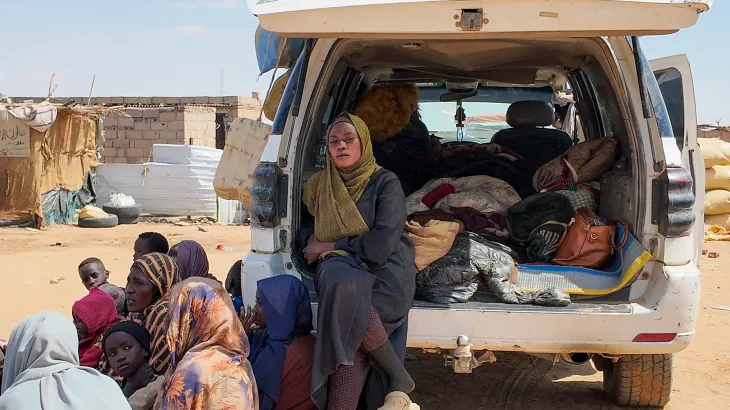
Returnees described exhausting journeys, extreme heat and limited services along travel routes. Some lacked the money needed to travel from border arrival points to their final destinations, while immediate material support and onward transportation remained limited.
According to the report’s map, Bahri recorded about 633,000 returnees, the highest figure among Khartoum localities, followed by Um Bada with about 528,000, Sharg An Neel with 417,000, Jabal Awliya with 387,000, Omdurman with 318,000, Khartoum with 142,000 and Karrari with 87,000.
Homes Damaged, Looted or Uninhabitable
UNHCR said one of the biggest obstacles facing returnees was the condition of housing.
Many families returned to find homes damaged, looted or destroyed. Some were able to repair only a few rooms, while others were living in roofless houses or sleeping outdoors because they could not afford proper repairs.
Even where houses remained structurally habitable, many had been stripped of furniture, appliances and household items.
The report said rent and home repairs had become some of the largest expenses facing returnees, while inflation, unemployment and falling purchasing power left many families unable to finance reconstruction or replace lost belongings.
Some families were staying with relatives in overcrowded homes, while others faced insecure arrangements in properties belonging to relatives who remained abroad.
Healthcare Returns Unevenly
Health services have resumed in parts of Khartoum but remain difficult to access, particularly because of consultation fees, medication costs and transportation expenses.
UNHCR said primary healthcare centers frequently lacked medicines and diagnostic equipment, while specialized services, including dialysis and mental healthcare, remained limited.
People requiring treatment for trauma, addiction, chronic diseases or malaria were among those facing particular difficulties.
The report identified healthcare as one of the central barriers to sustainable return, alongside shelter and access to basic services.
Electricity Shortages Disrupt Water Supplies
Water access remains closely linked to the unreliable electricity system.
Power cuts often prevent water pumping and storage, forcing families in some areas to buy water from street vendors using jerry cans.
UNHCR said this adds to household expenses and may expose families to water of uncertain quality. Water was commonly sold in quantities costing around 1,000 Sudanese pounds, while some households had to travel significant distances to reach vendors.
Schools were also reported to have inadequate water supplies, electricity, functioning latrines and drainage systems.
Few Jobs as Living Costs Rise
Returnees are also struggling to rebuild livelihoods.
The local labor market and private sector have not recovered enough to absorb growing numbers of people seeking employment, while many businesses that existed before the war have closed or lost productive assets.
Some returnees cannot resume their previous occupations because equipment was looted or destroyed, employers disappeared, or they lack money to restart small businesses.
The report said limited income affects households’ ability to pay for food, rent, home repairs, water, transport, healthcare, medicine, documentation and education.
Replacing lost civil documents can also be expensive. UNHCR said replacing a national number was reported to cost about 80,000 Sudanese pounds, excluding transport and repeated trips required to complete the process.
Some households have responded by reducing meals, withdrawing children from school or relying on adolescents to perform manual labor instead of continuing their education.
Security Concerns Remain
Although security conditions have reportedly improved in some parts of Khartoum, returnees continue to raise concerns about crime, drone incidents and unexploded ordnance.
UNHCR said explosive remnants of war were widespread across the capital, while limited mine-risk education left civilians, particularly children, vulnerable to accidents.
Electricity shortages and inadequate street lighting were also reported to increase neighborhood-level risks after dark.
The report warned that insecurity, weak services and limited livelihoods could push some returnees into secondary displacement or renewed movement across borders.
Return Does Not Mean Recovery
UNHCR said large-scale returns to Khartoum should not be interpreted as evidence that reintegration is secure or sustainable.
Many families continue to face serious barriers to housing, healthcare, income, water and electricity, while psychosocial stress and family separation remain widespread.
The report concluded that without expanded public services, mine action and livelihood support, pressure on returnees and host communities would continue, potentially undermining the sustainability of returns.


