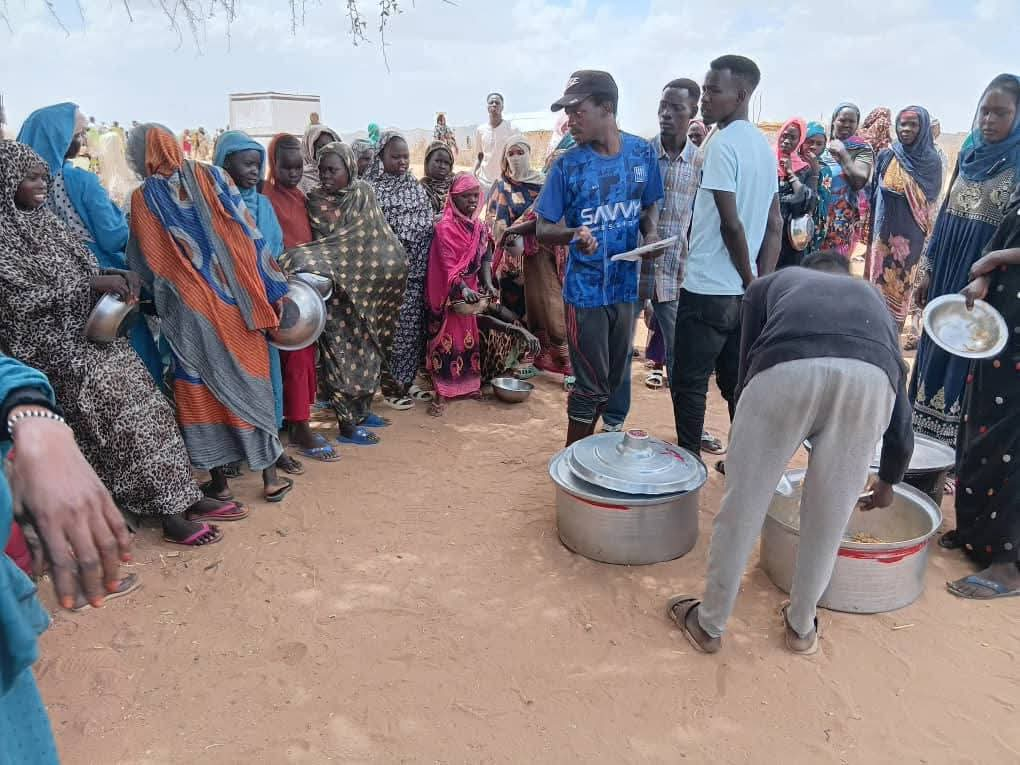

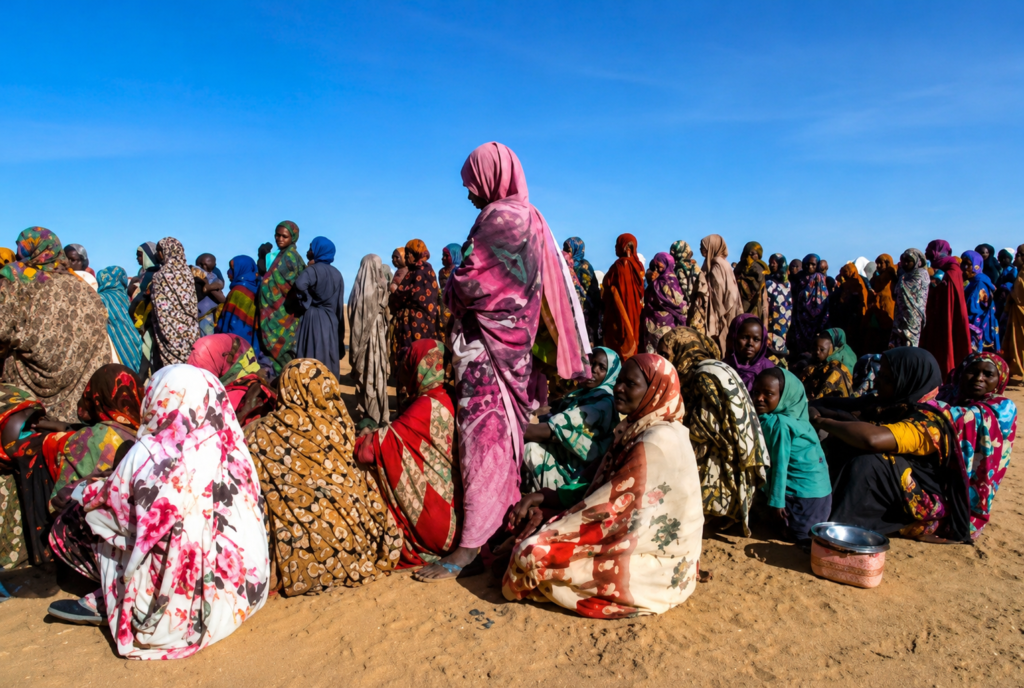
LONDON – The United Kingdom and 31 international partners warned on Friday that Sudan faces a growing risk of famine in the coming months, with an estimated 19.5 million people experiencing high levels of acute food insecurity and millions already at emergency levels.
In a joint ministerial statement, the governments and institutions said urgent action was needed to prevent further deterioration, warning that delays in humanitarian access and funding could push more communities toward famine.
About 41% of Sudan’s population is experiencing severe food insecurity, including around 5 million people facing emergency conditions, according to the statement.
The signatories also warned that the number of children suffering from severe acute malnutrition could exceed a projected 825,000 if current trends continue.
Areas facing severe food insecurity are also expected to increase significantly, with the number initially assessed at 14 projected to double.
The statement identified Sudan’s war as the main driver of the hunger crisis, saying fighting has displaced millions of people, damaged critical infrastructure and disrupted healthcare, food production, supply chains and markets.
Sudan has been at war since April 2023, when fighting erupted between the Sudanese Armed Forces and the Rapid Support Forces, triggering mass displacement and one of the world’s largest humanitarian emergencies.
The ministers said restrictions on humanitarian aid were further worsening conditions, while reduced rainfall and drought linked to El Niño had affected more than half of the country.
They called on the warring parties to remove obstacles to humanitarian operations and allow full, safe and rapid access across front lines and international borders.
The statement specifically urged authorization of humanitarian operations through all cross-line and cross-border routes, including air access into Darfur to speed up aid delivery and medical evacuations for humanitarian workers.
It also called for measures to protect aid personnel, reduce delays in issuing visas and customs clearances and remove additional permits, taxes and bureaucratic requirements that slow humanitarian operations.
The signatories urged the parties to refrain from attacks on civilian infrastructure, including agriculture and food systems, warning that damage to such facilities further undermines access to essential services and food.
They also called for stronger civil-military coordination to improve the safety of humanitarian personnel and sites.
Food affordability has deteriorated sharply across Sudan alongside the humanitarian crisis.
Recent market monitoring has shown steep increases in staple food prices, while currency depreciation, fuel shortages, poor harvest prospects and conflict-related disruptions continue to reduce household purchasing power.
The international partners said governments, donors and financial institutions should urgently scale up funding and adapt existing programmes to focus on areas facing the greatest food insecurity.
They also called for immediate support for Sudan’s winter cropping season and greater investment in locally led humanitarian responses.
The joint statement was signed by representatives of countries including the United States, Germany, France, Canada, Australia, Italy, Spain, Sweden, Norway, Switzerland and the United Kingdom, as well as the European Commission.
U.S. Senior Adviser for Arab and African Affairs Massad Boulos was among the signatories.
The ministers said preventing famine would require immediate action from Sudan’s warring parties and the international community, warning that worsening hunger could become increasingly difficult to reverse if humanitarian access and funding remain inadequate.