

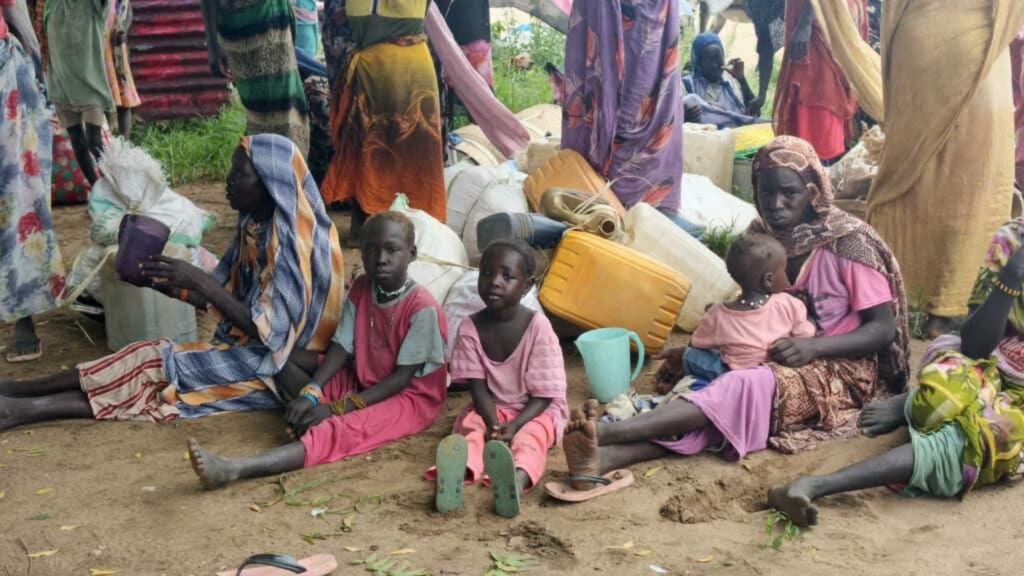
KHARTOUM – Nearly 120,000 people have been displaced from areas of Sudan’s Blue Nile State since fighting escalated in January, a 21% increase since late August, while the state’s overall displaced population has risen to more than 417,000, according to the International Organization for Migration.
IOM’s Displacement Tracking Matrix estimated that 119,782 people from 23,598 households had been displaced from locations across Blue Nile between Jan. 11 and Oct. 15.
The figure increased from 99,277 people recorded on Aug. 23, reflecting both continued insecurity and expanded data collection by IOM field teams.
Blue Nile State was hosting a total of 417,714 internally displaced people as of late September, according to IOM.
The largest numbers of people displaced since January originated from Geisan, where 40,090 people fled, followed by Al Kurmuk with 31,165, Baw with 27,192 and Wad Al-Mahi with 21,335.
Around 69% of those newly displaced were staying in Ed Damazine and Ar Rusayris.
Ed Damazine hosted 45,815 of the people displaced since January, while Ar Rusayris hosted 36,950.
Displacement in Ar Rusayris More Than Triples
IOM recorded the sharpest increase in Ar Rusayris, where the number of displaced people rose from 11,060 in August to 36,950 by mid-October.
That represents an increase of 234%.
Field teams said many families remained in Ar Rusayris because of community and tribal ties and because the locality offered better access to services than some alternative destinations.
Some displaced households were also able to remain relatively close to farms in their areas of origin, allowing them to travel back temporarily if security conditions permitted.
By contrast, the estimated number of displaced people staying within Geisan fell from 15,735 to 10,275, although IOM said population movements remain highly dependent on changing security conditions.
Recent displacement events have affected Geisan, Al Kurmuk and Wad Al-Mahi in particular.
Between Oct. 3 and 6 alone, an estimated 6,800 people fled Amiri, Jebel Nimir, Menza and Mekla in Wad Al-Mahi.
Another 7,000 people had been displaced from communities in the locality in late September.
More Families Moving Into Towns
The report identified an increasing movement of displaced families toward urban centres.
About 53% of those displaced since January were living in urban locations by mid-October, compared with 47% in rural areas.
In August, rural locations had hosted the majority.
IOM said the shift may reflect better access to humanitarian assistance and services in towns such as Ed Damazine and Ar Rusayris.
Housing conditions are also deteriorating as host communities absorb successive waves of displacement.
More than half of newly displaced households — 56% — were staying in informal gathering sites.
Another 24% were staying with host families, while 20% were sheltering in schools or other public buildings.
The proportion using schools and public buildings has more than doubled from 9% in August.
IOM said host communities were already accommodating large numbers of displaced families, pushing newcomers toward collective shelters.
Healthcare Costs Block Access
Humanitarian needs remain substantial among displaced households across Blue Nile.
Around 60% of surveyed displaced households said at least one family member had needed healthcare during the previous three months.
Nearly half — 49% — said they could not afford treatment.
About 43% reported that required medicines, treatments or services were unavailable, while 37% could not afford transportation to health facilities.
A further 26% cited shortages of qualified medical personnel.
The findings were drawn from IOM’s Multi-Sector Needs Assessment conducted in July and August and cover displaced households across Blue Nile, not only those displaced during the latest fighting.
Food Prices Rising
Economic pressure is also worsening conditions for displaced families.
IOM said 95% of surveyed households reported increases in the prices of essential food and non-food goods during the previous month.
About 23% of households had “borderline” food consumption and 2% were classified as having poor food consumption.
More than a third reported difficulties reaching markets, including physical barriers and transport costs.
The findings come as conflict in Blue Nile disrupts livelihoods, agricultural activity, trade and access to basic services.
Families Struggle for Water and Aid
Access to drinking water remains another major concern.
About 41% of displaced households said they lacked sufficient drinking water for one or two days during the previous four weeks, while 22% reported shortages lasting between three and 10 days.
Among households adopting coping strategies, 64% purchased water.
Others borrowed or shared water with neighbouring households, reduced consumption or turned to lower-quality and potentially unsafe sources.
IOM also found that 38% of households faced barriers to accessing humanitarian assistance.
Among those reporting difficulties, 64% cited a lack of information about available assistance, 43% said aid was unavailable and 35% reported discrimination.
Other barriers included missing documentation, transport costs and distance from assistance points.
Returns Continue Alongside New Displacement
The displacement crisis is unfolding alongside significant returns to Blue Nile.
IOM estimated that 231,562 people had returned to locations across six localities since July 2025.
About three-quarters returned from abroad, while the remainder returned after internal displacement.
However, many returnees were still living in collective centres rather than their former homes.
IOM said 96% of surveyed returnees cited improved security as the reason for returning.
The simultaneous pattern of return and fresh displacement illustrates the rapidly changing security environment in Blue Nile, where fighting has repeatedly shifted between localities during 2026.
IOM cautioned that all displacement figures remain preliminary and could change as security conditions evolve and additional verification becomes available.


