

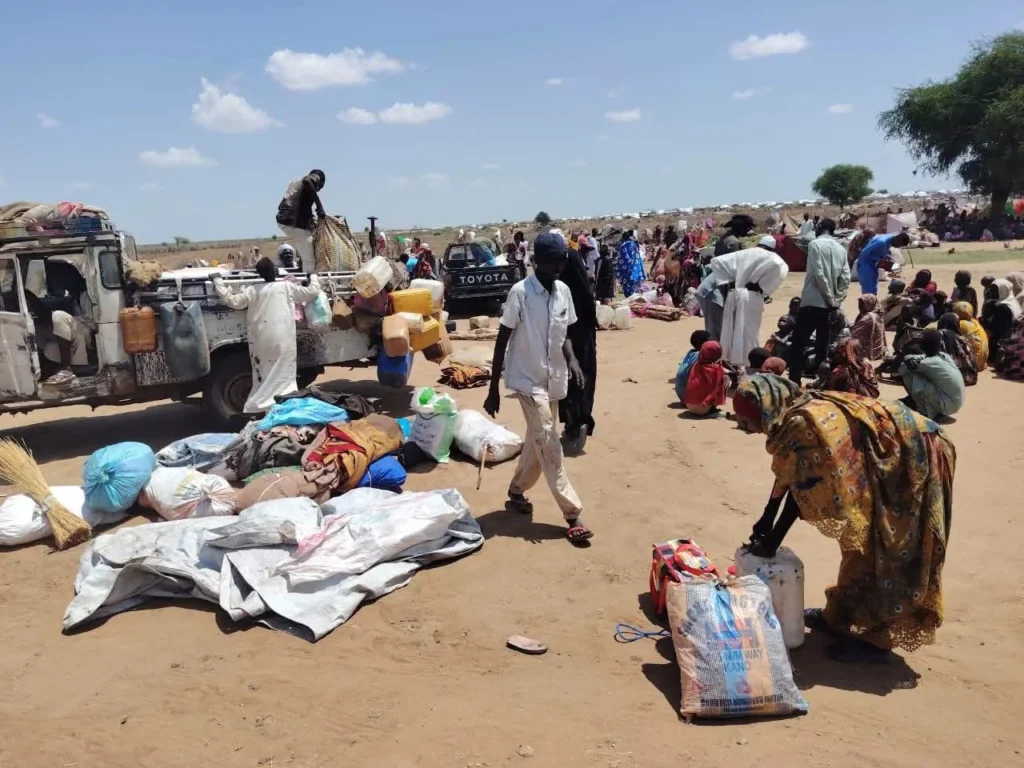
TAWILA – More than 6,000 displaced people have arrived in Tawila, North Darfur, since the beginning of September, including nearly 1,400 people who reached the area in the past week, as worsening insecurity and humanitarian conditions continue to drive families from other parts of the state.
The General Coordination for Displaced Persons and Refugees said 260 families, totaling 1,394 people, arrived in Tawila between Sept. 28 and Oct. 3, most of them women, children and elderly people.
Spokesman Adam Rijal said the total number of new arrivals between Sept. 1 and Oct. 3 had reached 1,169 families, or 6,191 people, who fled different areas of North Darfur amid deteriorating security and living conditions.
Rijal said the displaced families arrived in severe humanitarian conditions worsened by food insecurity, drought, limited rainfall and the effects of famine, while resources and basic services in receiving areas remain limited.
Tawila has continued to receive displaced families because it is regarded as relatively safer than several conflict-affected areas of Darfur, but the influx is placing growing pressure on already limited services and resources.
Newly arrived families urgently need food, medicines, drinking water, shelter, health care, sanitation and hygiene services, as well as protection and psychosocial support, according to the coordination body.
It said priority should be given to children, women, elderly people and other vulnerable groups.
The new arrivals come as Sudan’s wider humanitarian response faces growing pressure from mass displacement and funding shortages.
The World Food Programme has said about 19.5 million people in Sudan are facing crisis levels of food insecurity and that it needs $579 million to sustain operations through October 2026.
WFP has also warned that shrinking funding has forced it to reduce or reprioritize food assistance in Sudan.
The pressure is particularly acute in Tawila, where the number of displaced people is approaching 1 million, further stretching humanitarian capacity.
The International Organization for Migration has also warned that displacement continues across conflict-affected areas of Darfur and Kordofan, while needs for shelter, water, health care and protection are increasing.
Host communities are facing similar pressure as infrastructure, public services and local resources struggle to meet the growing demand.
Rijal warned that continued displacement combined with severe shortages in humanitarian assistance could increase malnutrition, disease and protection risks.
He called on humanitarian organizations, international agencies and donors to respond urgently and in a coordinated manner with life-saving assistance.
The coordination body said support was especially needed in food, water, health, shelter, sanitation, protection and psychosocial services, warning that early intervention was essential to prevent conditions from deteriorating further.


