

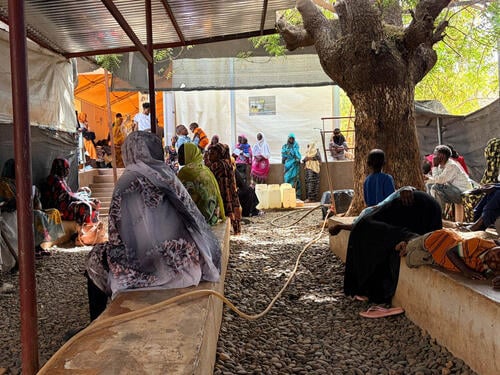
GEDAREF_ Médecins Sans Frontières (MSF) warned on Tuesday that worsening funding shortages and the withdrawal of humanitarian organizations are leaving thousands of refugees and vulnerable Sudanese communities in eastern Sudan without adequate healthcare, food, water and protection.
The medical charity said the number of humanitarian organizations operating in Um Rakuba refugee camp in Gedaref State has fallen from around 35 organizations in 2021 to fewer than 10, largely because of declining humanitarian funding.
Um Rakuba hosts about 17,000 Ethiopian refugees, most of whom fled the conflict in Ethiopia’s Tigray region in 2020 before becoming caught in Sudan’s war after fighting erupted in April 2023.
MSF said it has become the main provider of specialized healthcare in the camp, serving both refugees and nearby Sudanese communities. Its teams carried out more than 68,000 outpatient consultations during 2025, while about 80% of patients are now Sudanese from surrounding areas after several local health facilities closed.
The organization said refugees and host communities are facing growing shortages of healthcare, food assistance, clean water, sanitation services and protection, while reductions in humanitarian assistance have weakened support for women, children and other vulnerable groups.
MSF also warned that food rations have declined sharply. Refugees now receive about 4 kilograms of wheat per person each month, dropping to 2.5 kilograms during some months, compared with roughly 14 kilograms before Sudan’s conflict began.
Although Gedaref has remained away from the main front lines, the state has absorbed more than one million internally displaced people fleeing fighting in Khartoum, Gezira, Sennar and other areas, placing severe pressure on already limited public services, the organization said.
MSF added that repeated outbreaks of cholera, measles, malaria and meningitis, together with severe malnutrition, continue to threaten vulnerable communities as humanitarian capacity declines.
The organization said it remains the only provider of secondary healthcare and comprehensive services for survivors of sexual and gender-based violence in the camp, while access to HIV, tuberculosis and neglected tropical disease treatment remains severely limited.
MSF called on international donors, U.N. agencies and humanitarian organizations to increase funding and restore essential services, warning that continued reductions in aid would leave refugees and host communities facing preventable suffering.
Sudan’s war, which began in April 2023 between the Sudanese Armed Forces (SAF) and the Rapid Support Forces (RSF), has displaced millions of people and created one of the world’s largest humanitarian crises. Aid agencies have repeatedly warned that funding shortfalls are forcing them to scale back operations despite rapidly growing needs across the country.


