

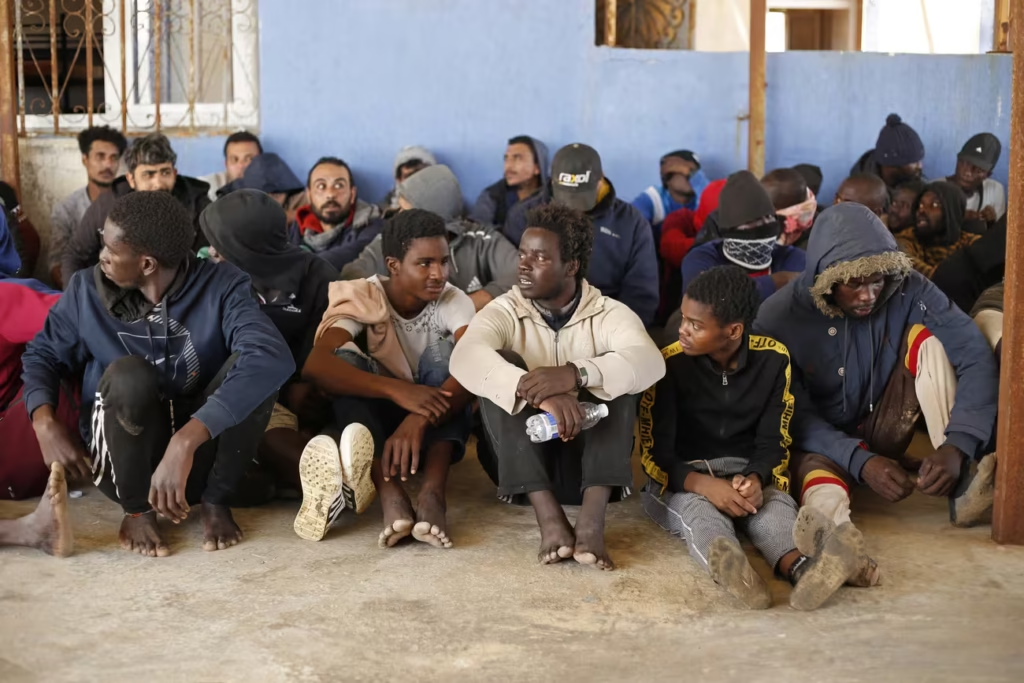
KUFRA – Calls are mounting for Sudanese authorities to urgently intervene to protect Sudanese refugees and migrants detained in Libya, after activists circulated footage they said showed detainees held in degrading conditions, restrained with chains and subjected to torture and ill-treatment.
The footage has raised fresh questions about the fate of Sudanese nationals in Libyan detention centres, amid a lack of official information on the number of detainees, their whereabouts and the conditions in which they are being held.
Sudanese activists said hundreds of Sudanese nationals may be detained in several Libyan prisons and detention facilities, where they face severe shortages of food, drinking water and medical care.
Some activists also alleged that detainees had died from hunger, illness and torture. Sudan Now could not independently verify the footage, the number of detainees or the reported deaths. The allegations require an independent investigation to establish the scale of any abuses and identify those responsible.
Tragedy Behind Bars
Activists say the continued detention of Sudanese nationals in harsh conditions amounts to a humanitarian tragedy requiring urgent diplomatic action by the Sudanese government, rather than relying only on public statements about migration.
They called on Sudan’s Foreign Ministry, embassy and consulates in Libya to disclose what measures have been taken to monitor Sudanese detainees, determine their number and locations, ensure access to food, water and medical care, and seek the release of those held without clear legal procedures.
The calls come as Sudanese families continue to search for missing relatives who left the country because of war, poverty or insecurity, only to lose contact after entering Libya or being detained during security operations.
Fleeing War and Poverty
Sudanese migration to Libya predates the current war. Economic hardship, unemployment and limited prospects had already pushed thousands of Sudanese, particularly young people, to take irregular migration routes through Libya in search of work or a path to Europe.
The outbreak of Sudan’s war in April 2023 triggered a new wave of displacement and migration, as thousands fled areas of fighting in search of safety and protection. Some entered Libya through dangerous desert routes controlled by smugglers, armed groups and trafficking networks.
Along the way, Sudanese migrants face multiple risks, including getting lost in the desert, dying from thirst or hunger, kidnapping, extortion, forced labour and human trafficking.
Death in the Desert and at Sea
The Sahara route has become a deadly pathway for many Sudanese migrants, exposing them to extreme heat, shortages of water and food, and threats from criminal groups operating across remote border areas.
Those who reach Libya’s coast may attempt to cross the Mediterranean in unsafe and overcrowded boats, risking drowning in the hope of reaching European Union countries for safety, work, education or better prospects for their families.
For Sudanese fleeing the war, the journey can become a continuous chain of dangers, beginning with conflict at home and continuing through desert crossings, detention, trafficking networks and attempted sea crossings.
Security Operations and Detentions
The latest allegations come amid security operations by Libyan authorities targeting migrants and refugees, including Sudanese nationals, in different parts of Libya.
Activists say large numbers of Sudanese have been detained, particularly those living without legal status, and that some were later transferred to detention centres lacking basic humanitarian conditions.
The issue is further complicated by Libya’s divided security landscape, with multiple military, security and administrative authorities controlling different areas. That fragmentation makes it difficult to determine which entity is directly responsible for each detention centre or arrest operation.
Where Is the Sudanese Government?
Activists and advocates for Sudanese nationals abroad are raising direct questions about the role of the Sudanese government and its diplomatic missions in Libya.
They are asking who is responsible for protecting Sudanese nationals in Libya, who is monitoring detention conditions, whether the Sudanese Embassy has records of detainees and their locations, and what steps have been taken to secure the release of those held unlawfully.
They are also calling on Sudanese authorities to use diplomatic channels to press Libyan authorities to improve detention conditions, ensure access to food, water and medical care, prevent torture and degrading treatment, and investigate alleged violations.
Responsibility of Libyan Authorities
The calls are not limited to Sudanese authorities. Libyan authorities are also facing demands to respect the rights of migrants and refugees, end torture and degrading treatment, and ensure that arrests and detentions are carried out according to law.
Activists called for an independent investigation into the circulated videos to verify the identities of those shown, as well as where and when the footage was recorded.
They also urged humanitarian and human rights organizations to be granted access to detention centres to monitor the conditions of Sudanese detainees and prevent such facilities from becoming closed sites beyond independent oversight.
Anyone found responsible for torture, denial of food, water or medical care, or other abuses should be held accountable, activists said.
A Crisis Beyond Migration
The plight of Sudanese nationals in Libya highlights a crisis that goes beyond irregular migration. It is driven by war, poverty, displacement and the collapse of opportunities at home, leaving many young people unable to build a future in Sudan.
Many of those fleeing Sudan are not simply seeking better economic conditions, but safety, work, education and a way to support families left behind.
When they end up behind bars after a dangerous journey, deprived of freedom or subjected to torture and humiliation, the issue becomes more than migration. It becomes a human rights crisis and a test of the state’s responsibility to protect its citizens abroad.
Allegations of Forced Recruitment
The allegations surrounding Sudanese detainees in Libya go beyond torture and ill-treatment.
Sudanese activists say some refugees and detainees have been forcibly recruited into the Rapid Support Forces (RSF) to fight in Sudan after allegedly undergoing military training in Libya.
The allegations are directed in particular at forces affiliated with Khalifa Haftar in eastern Libya. Activists say some Sudanese detainees were pressured or coerced into recruitment before being sent to Sudan to fight alongside the RSF.
According to these accounts, the alleged process begins with Sudanese nationals being detained in centres run by Libyan authorities or armed actors. Some are then allegedly subjected to military training before being transferred to Sudan.
There is currently insufficient independent information to verify the scale of these alleged practices or the number of Sudanese believed to have been subjected to them.
If refugees or detainees were forcibly recruited to take part in an armed conflict outside Libya, it would constitute a serious violation of their rights and raise questions about the responsibility of those who detained them, trained them or facilitated their transfer to conflict zones.
Activists called for an independent investigation into the allegations, including verification of the identities of detainees whose cases have emerged, their places of detention, and the parties responsible for any training or transfer.
They also called for those responsible for any forced recruitment, human trafficking or transfer of detainees to conflict zones to be identified and held accountable.
The Sudanese government bears primary responsibility for determining the fate of its detained nationals, taking steps to protect them and ensuring that those fleeing the war do not become victims again along migration routes or inside detention centres.
As families await news of missing relatives, questions remain over how many Sudanese nationals are currently held in Libyan detention centres, how many have received legal or consular assistance, and how many fled Sudan’s war only to face another tragedy in Libya.


