

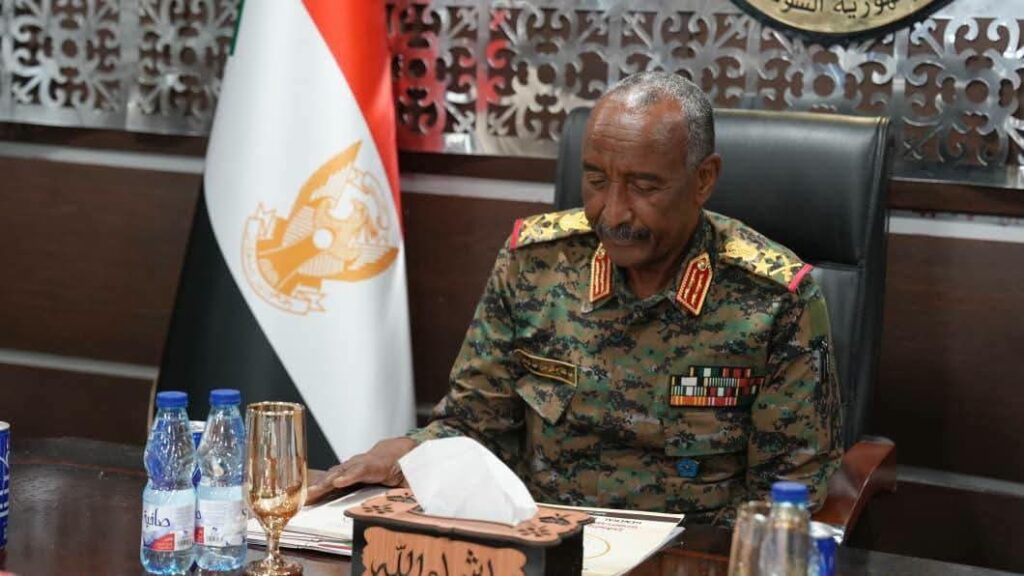
KHARTOUM – A senior adviser to Sudan’s Sovereign Council chairman accused the United Arab Emirates of using its influence at the UN Security Council to delay the referral of a UN report that he said documents alleged UAE support for the Rapid Support Forces (RSF).
Amjad Farid, adviser to Sovereign Council Chairman Abdel Fattah al-Burhan on political affairs and foreign relations, said the report contains evidence and documentation of UAE support for the RSF, including alleged weapons deliveries, supply routes, aircraft movements, armored vehicles and the deployment of Colombian mercenaries.
Speaking in an interview with Sudan TV, Farid said the report was supposed to be submitted to the sanctions committee established under Security Council Resolution 1591, but that what he described as UAE influence had so far prevented that step.
Sudan Now could not independently verify Farid’s claims about the alleged delay or the contents of the report he referred to. The UAE has repeatedly denied providing military, logistical, financial or political support to the RSF.
Resolution 1591 and Arms Embargo Debate
Resolution 1591, adopted by the Security Council under Chapter VII of the UN Charter, established a sanctions regime linked to Darfur, including an arms embargo and a sanctions committee.
Farid said the alleged delay comes amid continued efforts to lift the sanctions regime established under the resolution, while the United States is pushing a proposal to expand the arms embargo to cover all of Sudan.
He warned that linking the renewal of the 1591 sanctions committee’s mandate to the proposal to expand the arms embargo nationwide could carry serious risks.
If the broader embargo proposal fails to pass, Farid said, the existing sanctions regime could collapse, allowing weapons and military equipment to continue reaching the RSF through routes running via Chad and Libya.
Air Bridge Allegations
Farid said the report, based on documents he said he had reviewed, details what he described as an air bridge from the UAE’s Ghayathi and Al-Wathba air bases to N’Djamena in Chad and Kufra in Libya.
He said the routes were used to deliver weapons and military equipment to the RSF.
Farid also said the report documented several aircraft that had landed at airports used in the alleged supply operations.
He described the findings as based on “conclusive and indisputable” evidence and documentation.
Colombian Mercenaries
Farid said the report also documented the UAE’s alleged role in providing the RSF with between 1,500 and 2,000 Colombian mercenaries.
He said the Colombian personnel were involved in drone operations, combat missions and military planning.
According to Farid, the recruits were hired and deployed through Global Security Services Group, which he described as a UAE-based company linked to the ruling authorities.
He said the company’s founder is an official in the UAE Presidential Court.
Armored Vehicles
Farid said the report also documented the RSF’s use of armored vehicles manufactured in the UAE.
He said some of the vehicles were produced in 2023 and 2024 and delivered to the RSF through the alleged supply routes.
The allegations come amid growing scrutiny of external support to Sudan’s warring parties, particularly after UN investigators and rights groups reported that foreign weapons, drones, financing, logistics and fighters have helped sustain the conflict.
Background
Sudan’s war erupted in April 2023 between the Sudanese Armed Forces (SAF) and the RSF after a power struggle over security arrangements and the integration of the paramilitary force into the army.
The conflict has since spread across much of the country, causing mass displacement, widespread hunger, the collapse of basic services and repeated attacks on civilians.
The UN Independent International Fact-Finding Mission for the Sudan recently said a transnational network had supported RSF operations through routes involving the UAE, Chad, southeastern Libya and Puntland in Somalia, while also noting that its investigation into external support for the SAF remained preliminary.
The latest remarks by Farid come as divisions persist within the UN Security Council over the future of the Darfur sanctions regime and the U.S. proposal to extend the arms embargo to all of Sudan.


