
NEW YORK – Sudan remains the world’s largest hunger and displacement crisis, with about 20 million people facing acute hunger and 14 million displaced, as severe funding shortages threaten major cuts to food assistance within weeks, a senior World Food Programme official warned.
Carl Skau, acting executive director of the World Food Programme (WFP), issued the warning after an eight-day visit to Sudan that included Khartoum, Darfur and Kordofan.
Speaking to reporters in New York from Muscat, Oman, Skau described Sudan as a country where war, hunger, displacement, drought and acute funding shortages are converging to place millions of people at growing risk.
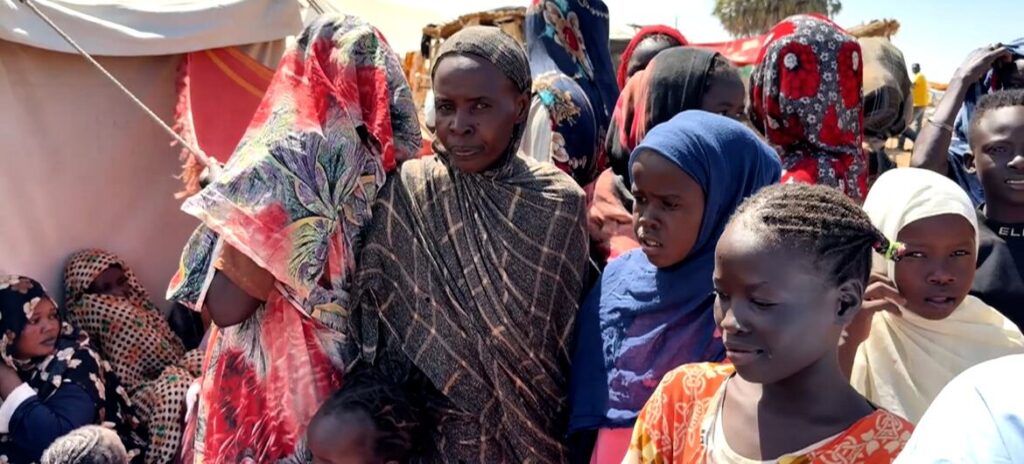
He said he met Sudanese who had been displaced since the war began more than three years ago as well as families uprooted only days earlier, some of whom had spent four or five days travelling on foot before reaching displacement sites.
Five Million Face Emergency Hunger
Skau said nearly five million people are experiencing emergency levels of hunger, classified as IPC Phase 4, while around 200,000 people face IPC Phase 5, the most severe level associated with famine conditions.
He said the statistics conceal an increasingly desperate reality for families who have lost homes, livelihoods and relatives during the conflict.
During the visit, Skau met women struggling to rebuild their lives after displacement. One former university student was living in a makeshift shelter without work after losing family members, while her mother suffered from depression and her father was ill.
At another location, women waiting for water were forced to return home with empty containers after a storage tank ran dry by midday.
Aid Access Becoming Increasingly Difficult
Reaching communities in need has become extraordinarily difficult because of fighting and restrictions on movement.
Skau said the journey between El Obeid and El Fasher, which took about six hours by road before the war, required three days during his visit.
His delegation travelled by air and land, including an approximately eight-hour flight from Khartoum via N’Djamena and Adré, followed by around 30 hours of road travel through difficult terrain.
Humanitarian workers remain unable to cross some front lines to reach communities on the other side, he said.
El Fasher Devastated After Siege
In El Fasher, Skau described extensive destruction after around 18 months of siege, famine and what he called “unspeakable atrocities.”
The city once had a population of around one million people, but only tens of thousands are now believed to remain, he said.
Homes along entire streets were riddled with bullets, burned vehicles remained scattered around the city and economic activity had largely disappeared.
Only a handful of women could be seen selling small quantities of goods from makeshift stalls, he said.
Some families have returned to El Fasher because areas they fled to offered little or no support, but many returned to burned homes and have been forced to shelter in abandoned buildings or crowd together with other families.
WFP is currently providing life-saving food assistance to around 20,000 people in the city, which Skau said is almost the only assistance reaching those who remain.
He also visited the nearby Zamzam displacement camp, describing it as a “complete ghost town” after shelters and small homes were destroyed and residents fled.
Tawila Population Approaches One Million
From El Fasher, Skau travelled to Tawila, which has become one of the largest destinations for civilians fleeing violence in North Darfur.
He said around 700,000 people were living there when he visited in April, but another 250,000 people have since arrived, bringing the population close to one million.
Some humanitarian conditions have improved, including shelter support and the provision of plastic sheeting and tarpaulins requested by women to protect families from rain.
WFP has also expanded its operations and is now reaching around 950,000 people in Tawila each month.
But food assistance remains insufficient.
Families receive only about half of a normal ration, enough food for roughly two weeks, Skau said.
Many households are headed by women who have lost husbands or sons, while education, healthcare, adequate shelter and safe spaces for children remain severely limited.
Worst Drought Since 1984
A worsening drought is adding another layer of pressure.
Skau said Darfur has not experienced drought conditions of this severity since 1984, despite the current period normally being the rainy season.
Communities fear serious consequences for both agriculture and livestock.
One resident told Skau that families depend on farming and WFP food assistance.
“If agriculture is now hit by drought, and WFP food is affected by funding cuts, how will we survive?” the resident asked.
El Obeid Camps Beyond Capacity
Skau also visited El Obeid, the capital of North Kordofan, which he described as a relatively safer destination for people arriving from other parts of Sudan.
The city’s population has nearly doubled since the start of the war, while displaced people are living in eight camps as well as within host communities.
Those camps are now beyond capacity.
Some women who had recently arrived told WFP they had walked for four or five days after their villages were destroyed.
Funding shortages are forcing WFP to make increasingly difficult decisions, including reducing assistance to people displaced several years ago in order to prioritize newly displaced families.
Funding Crisis Threatens WFP Operations
Despite difficult conditions, WFP is still reaching between four million and five million people every month, including about two million to 2.5 million people in hard-to-reach areas.
Skau warned, however, that funding is now the programme’s biggest obstacle.
WFP’s Sudan operation faces a severe funding shortfall and could be forced to make major reductions within the coming weeks unless additional resources are provided.
He called on donors to urgently provide funding, warning that humanitarian agencies cannot continue failing Sudanese civilians.
“We cannot keep letting these people down,” Skau said. “We have to provide them with the basics.”
He stressed that humanitarian aid alone cannot resolve Sudan’s crisis and called for greater political investment to end the war as world leaders prepare for the high-level week of the UN General Assembly.